
The clattering of chopsticks fills the air as friends gather around the steaming pot, laughter mingling with the savory aroma of Chanko Nabe. This iconic hot pot, cherished by sumo wrestlers, is a true testament to hearty, communal dining. With its rich chicken and pork broth, this dish invites you to customize with vibrant vegetables and protein-packed additions, making it not just a meal, but an experience. The best part? It comes together in no time, perfect for cozy winter nights or casual gatherings with loved ones. You’ll find that each spoonful is not only satisfying but also a fantastic way to bond over food. Ready to dive into this nourishing bowl of flavor? Let’s create your very own Chanko Nabe masterpiece that will leave everyone craving more!
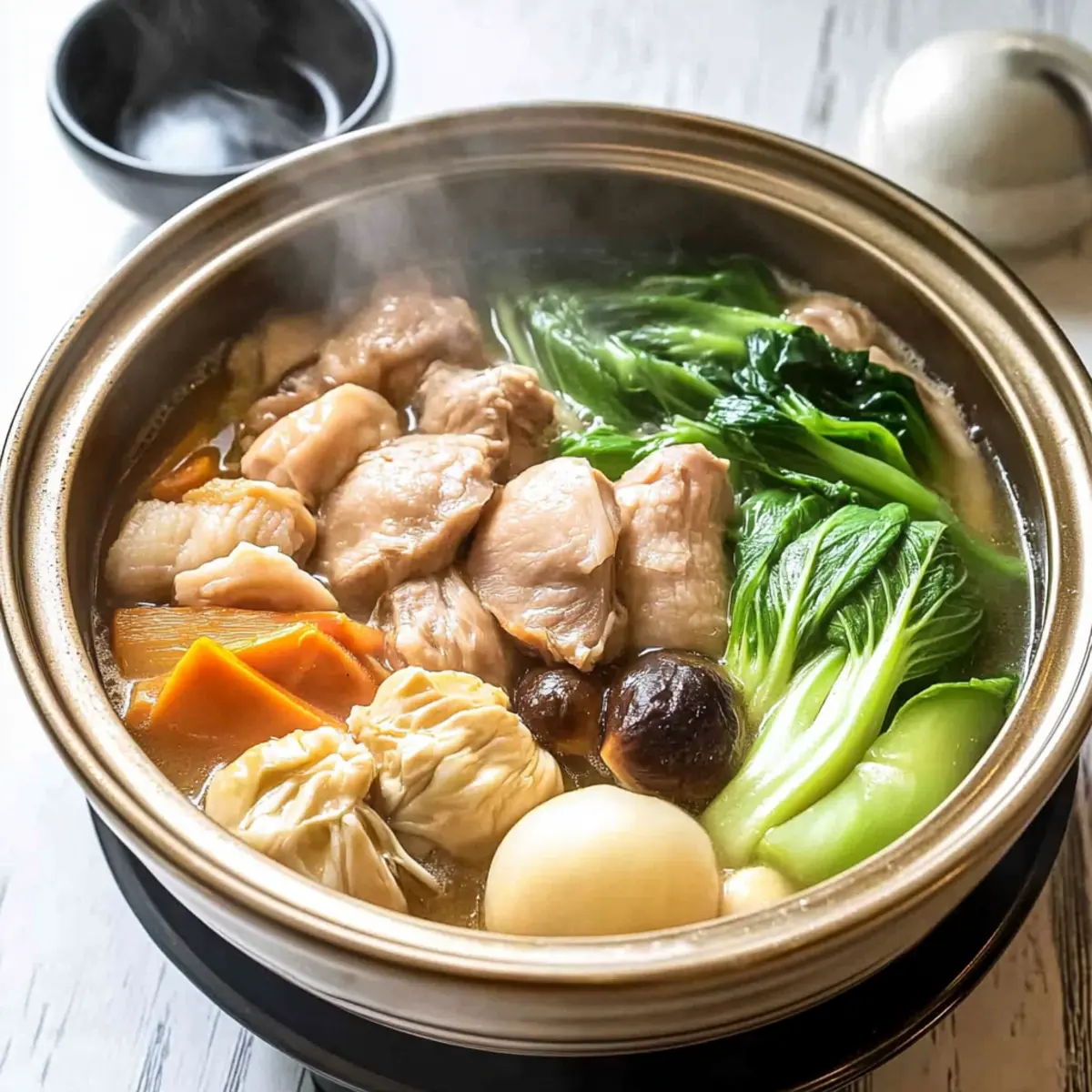
What makes Chanko Nabe so special?
Community, gathering around a hot pot is inherently social, as everyone shares in the cooking and dining experience. Customizable, you can tailor your ingredients to suit personal tastes or dietary needs, whether you prefer chicken, pork, or even a vegetarian twist. Nourishing, with protein-rich broth and fresh vegetables, it’s not just a meal, but a wholesome feast. Quick to prepare, the rich flavors develop without hours in the kitchen, making it a go-to for any occasion. For more delightful options, consider pairing it with a side of Hot Orange Chicken or explore variations with seasonal ingredients to keep every gathering fresh and exciting.
Chanko Nabe Ingredients
Get ready to create an unforgettable pot of Chanko Nabe with these essential ingredients!
For the Broth
• Water – The foundation for a flavorful broth; no need for substitutions.
• Whole Chicken Carcass – Adds deep, rich flavor to the broth; chicken parts are acceptable but can’t match the depth.
• Konbu (seaweed) – Soak before use to unlock umami flavors for the broth.
• Chicken Broth – Convenient alternative; use store-bought chicken bouillon for quick preparation.
• Cooking Sake – Enhances the broth’s depth; feel free to swap with dry white wine if needed.
• Salt – Essential for seasoning; adjust based on other ingredients’ saltiness.
• Mirin – Sweetens the broth; honey can be a good substitute when mirin is unavailable.
• Soy Sauce – Adds savory richness; tamari works well for a gluten-free version.
• Sesame Oil – Provides nuttiness; it’s optional but really enhances flavor.
For the Protein
• Tsukune Balls (chicken meatballs) – A protein-packed delight; tofu balls can replace for a vegetarian choice.
• Pork Belly – Contributes richness; substitute with turkey or omit for a lighter option.
• Chicken Thigh Fillet – Juicy and tender; opt for chicken breast if you prefer leaner meat.
For the Vegetables
• Bok Choy – Adds crunch and nutrition; spinach or chard can easily swap in if needed.
• Chinese Cabbage – Brings texture; regular green cabbage or kale makes a perfect substitute.
• Carrot – Offers sweetness and color; any root veggie can work well here.
• Shallots/Scallions – Provides a mild onion flavor; onions or leeks can replace them.
• Shiitake and Enoki Mushrooms – Contributes umami and texture; feel free to experiment with your favorite mushrooms.
Chanko Nabe is not just a dish; it’s an experience waiting to be enjoyed! Gather your loved ones and start cooking this hearty hot pot today!
Step‑by‑Step Instructions for Chanko Nabe (Sumo Wrestler’s Hot Pot)
Step 1: Prepare the Broth
Begin by soaking the konbu in cold water for at least 30 minutes to enhance its umami flavor. In a large pot, bring 4 quarts of water to a boil, then add the whole chicken carcass and skimming off any foam that rises to the surface. Reduce the heat and let the broth simmer gently for 30 to 60 minutes, allowing it to develop a rich, flavorful base.
Step 2: Flavor the Broth
Once the broth has simmered, strain it through a fine mesh sieve into a clean pot to remove the chicken and any impurities. Heat the strained broth to a gentle simmer, then stir in the cooking sake, salt, mirin, soy sauce, grated garlic, and ginger. Taste and adjust the seasoning as needed, allowing the broth to become perfectly balanced for your Chanko Nabe.
Step 3: Prepare Ingredients
While the broth is simmering, wash and chop your vegetables and proteins into bite-sized pieces for easy cooking. Slice bok choy, carrots, and mushrooms, and form your tsukune balls if using. Ensure everything is prepped and ready to go, making the cooking process smooth and enjoyable when you combine all the ingredients in the pot.
Step 4: Cook the Ingredients
With the broth at a simmer, add in the prepared tsukune balls and pork belly first, allowing them to cook for about 5-7 minutes until cooked through. Then, gently add the remaining vegetables, such as bok choy and mushrooms, cooking for an additional 4-5 minutes until the vegetables are tender yet vibrant. The Chanko Nabe is now ready to be enjoyed!
Step 5: Serve and Enjoy
Once everything is cooked, you can serve Chanko Nabe right from the pot for a communal dining experience, or ladle the nourishing soup into bowls. For an extra touch, consider adding cooked rice or noodles to leftover broth for a heartwarming Zōsui. Gather around the table, and relish each comforting spoonful together!
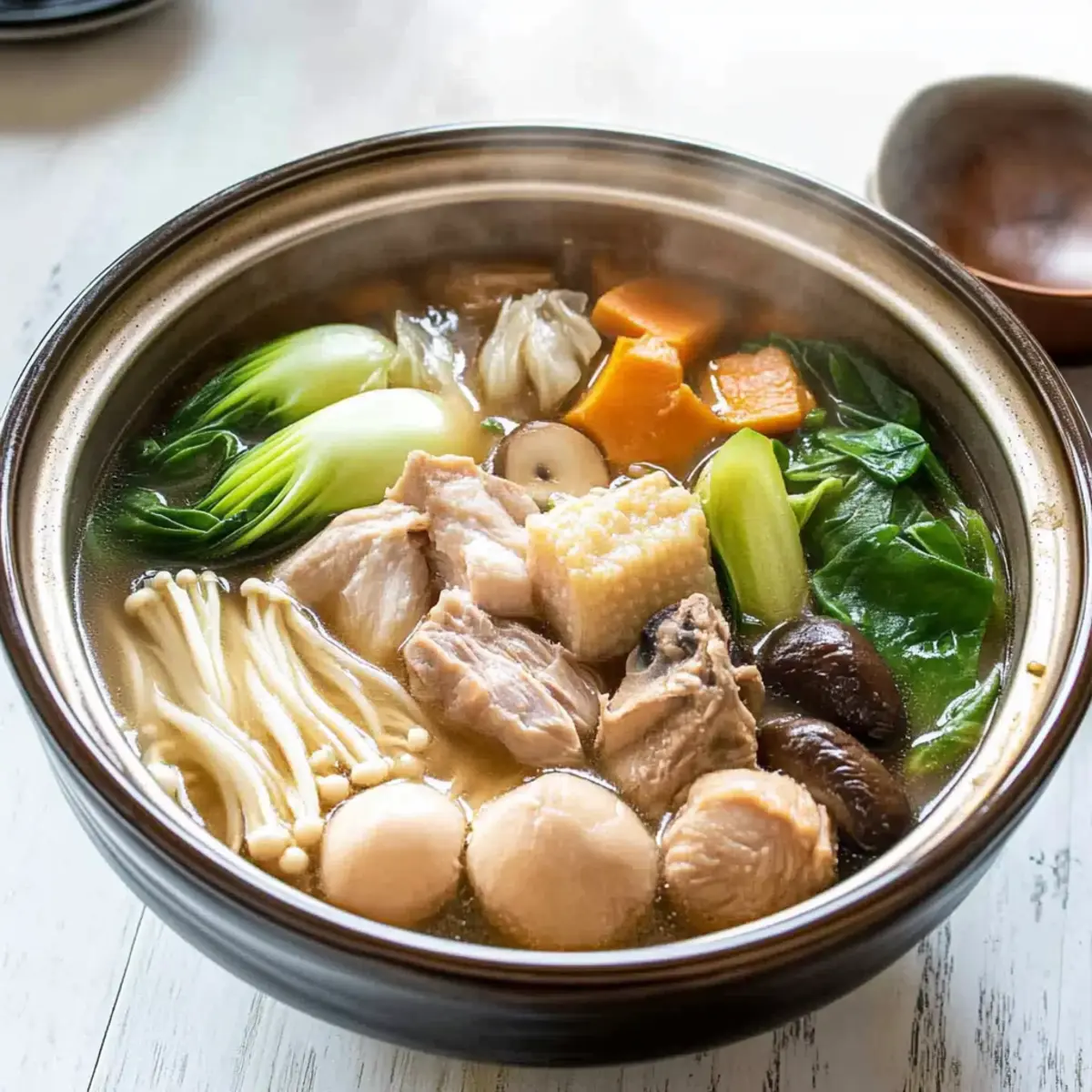
Make Ahead Options
Chanko Nabe is perfect for meal prep, making busy weeknights a breeze! You can prepare the broth up to 3 days in advance; simply let it cool, then refrigerate it in an airtight container. In addition, chop all your vegetables and proteins up to 24 hours ahead of time—just keep them stored separately in the fridge to maintain their freshness and prevent browning. When you’re ready to enjoy your Chanko Nabe, reheat the broth until it simmers, add the prepped ingredients, and cook until everything is tender and delicious. This way, you’ll have a warm, satisfying meal ready in no time, just as comforting as if it were made from scratch!
Expert Tips for Chanko Nabe
• Optimal Broth Depth: Ensure your chicken broth is well-seasoned; adding more garlic and ginger enhances depth while avoiding blandness.
• Cooking Together: Use a portable stove at the dining table for fun; everyone can cook their ingredients to their liking, enhancing the Chanko Nabe experience.
• Vegetable Timing: Don’t overcook your vegetables; they should remain colorful and slightly crisp for the best texture and taste in your hot pot.
• Ingredient Prep: Always prep your ingredients ahead of time; this keeps the cooking smooth and efficient, allowing you to focus on enjoying the communal meal.
• Customize Freely: Experiment with proteins or seasonal vegetables to personalize your Chanko Nabe and accommodate various preferences—it’s all about being creative!
Chanko Nabe Customizations
Feel free to make this delicious Chanko Nabe truly your own with these fun and inviting variations!
-
Seafood Twist: Swap chicken and/or pork for shrimp or fish, bringing a delightful ocean flavor to your hot pot.
-
Vegetarian Delight: Replace the broth with a konbu and shiitake dashi, and use tofu or additional veggies for a hearty vegetarian meal.
-
Spicy Kick: Add chopped chili peppers or a drizzle of sriracha to the broth for an extra layer of heat that will awaken your taste buds.
-
Flavorful Broth Boost: Stir in a splash of miso paste for a deeper umami experience, turning your broth into a savory masterpiece.
-
Texture Upgrade: Incorporate different mushroom varieties, such as oyster or portobello, to add unique flavors and textures to your hot pot.
-
Seasonal Veggies: Mix in fresh, seasonal vegetables like asparagus or zucchini to keep your Chanko Nabe vibrant and exciting, perfect for each gathering.
-
Noodle Addition: Toss in udon or soba noodles for a satisfying carb element, transforming your hot pot into a complete meal full of flavor.
-
Alternative Proteins: If you prefer leaner options, replace pork belly with turkey or mock meats, catering to personal dietary preferences while still enjoying a filling dish.
Each variation allows you to create a beautiful, personalized hot pot experience that’s as joyous as sharing a meal with loved ones. For more delicious inspiration, try pairing your Chanko Nabe with this delectable Hot Orange Chicken for a delightful flavor contrast!
What to Serve with Chanko Nabe?
Dig into a deliciously satisfying experience by complementing your hot pot with these delightful side dishes and drinks.
- Steamed Jasmine Rice: Fluffy, aromatic rice absorbs the rich broth and enhances the meal’s heartiness.
- Crunchy Pickled Vegetables: The tangy acidity of pickles balances the rich flavors of the hot pot, offering a refreshing contrast.
- Spicy Dipping Sauce: A zesty chili-garlic sauce adds a kick that elevates the overall flavor experience of the Chanko Nabe.
- Sesame Noodles: Cold noodles bring a delightful texture and a nutty flavor that pairs perfectly with the warm, savory broth.
With a pot of Chanko Nabe bubbling away, the addition of a warming sake complements the communal experience beautifully. Alternatively, a light, fruity white wine can enhance the sharing aspect of this hearty meal.
Don’t forget dessert! Light an after-meal spark with Green Tea Mochi—a sweet, chewy treat that cleanses the palate after a savory feast. Each pairing enhances the flavors and transforms your dinner into a cozy gathering that everyone will remember!
How to Store and Freeze Chanko Nabe
Fridge: Store any leftover Chanko Nabe in an airtight container for up to 3 days. Allow it to cool before refrigerating to maintain texture and flavor.
Freezer: For long-term storage, freeze the broth and proteins separately in airtight containers for up to 3 months. This helps to preserve quality and make reheating easier.
Reheating: Thaw frozen broth overnight in the fridge. Reheat gently on the stove, adding fresh vegetables and proteins to restore the dish’s delightful charm.
Make-Ahead: You can prepare the broth a day or two in advance; simply reheat before adding new ingredients for a quick, comforting meal.
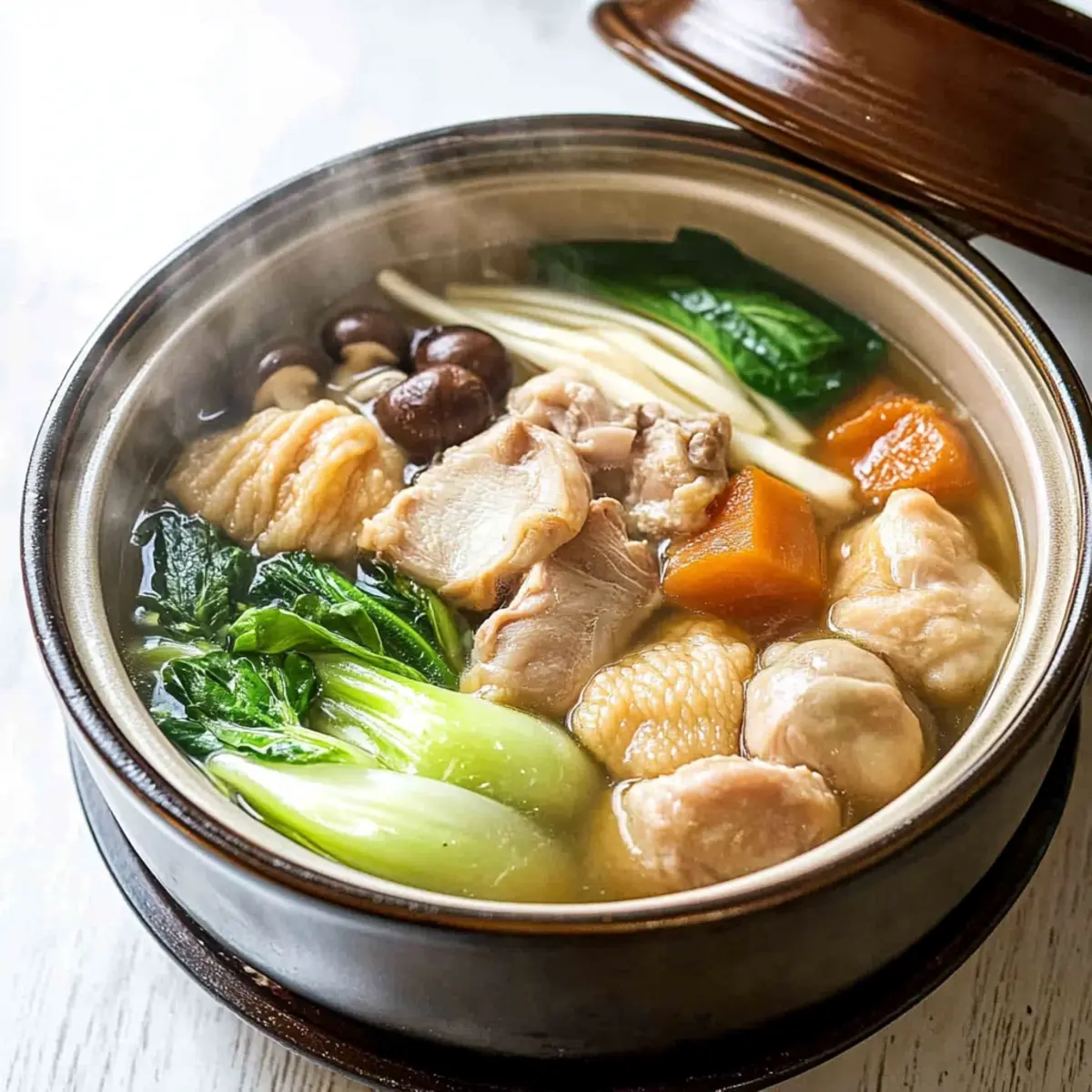
Chanko Nabe (Sumo Wrestler Hot Pot) Recipe FAQs
What type of chicken should I use for Chanko Nabe?
Absolutely! A whole chicken carcass is preferred as it provides a rich flavor to the broth. If unavailable, chicken parts can be used, but they won’t yield the same depth. Look for fresh, organic options for the best taste.
How should I store leftover Chanko Nabe?
For sure! Leftover Chanko Nabe can be stored in an airtight container in the refrigerator for up to 3 days. Be sure to let it cool before sealing to maintain the best texture and flavor. When ready to eat, simply reheat on the stove until piping hot.
Can I freeze Chanko Nabe?
Yes, you can! To freeze, separate the broth and proteins into airtight containers. The broth can be frozen for up to 3 months. Thaw overnight in the fridge, then reheat gently on the stove, adding fresh ingredients as desired for the best flavors.
What if my broth turns out bland?
Very! If your broth seems bland, it’s likely under-seasoned. Add more cooking sake, soy sauce, or a pinch of salt to enhance the flavor. You can also include additional fresh garlic and ginger for a boost. Let it simmer for a few extra minutes after adjusting the seasonings.
Are there any dietary restrictions I should consider with Chanko Nabe?
Absolutely! If you are cooking for someone with allergies or dietary restrictions, feel free to customize your ingredients. For gluten-free options, use tamari instead of soy sauce and consider replacing meat with tofu for a vegetarian version. Always check the labels on packaged ingredients to ensure they meet dietary needs.
How can I customize my Chanko Nabe?
The more the merrier! One of the best features of Chanko Nabe is its versatility. You can swap in seasonal vegetables or proteins according to your preferences. For instance, add root vegetables in winter or use seafood instead of chicken and pork for a unique twist. Enjoy the creativity!
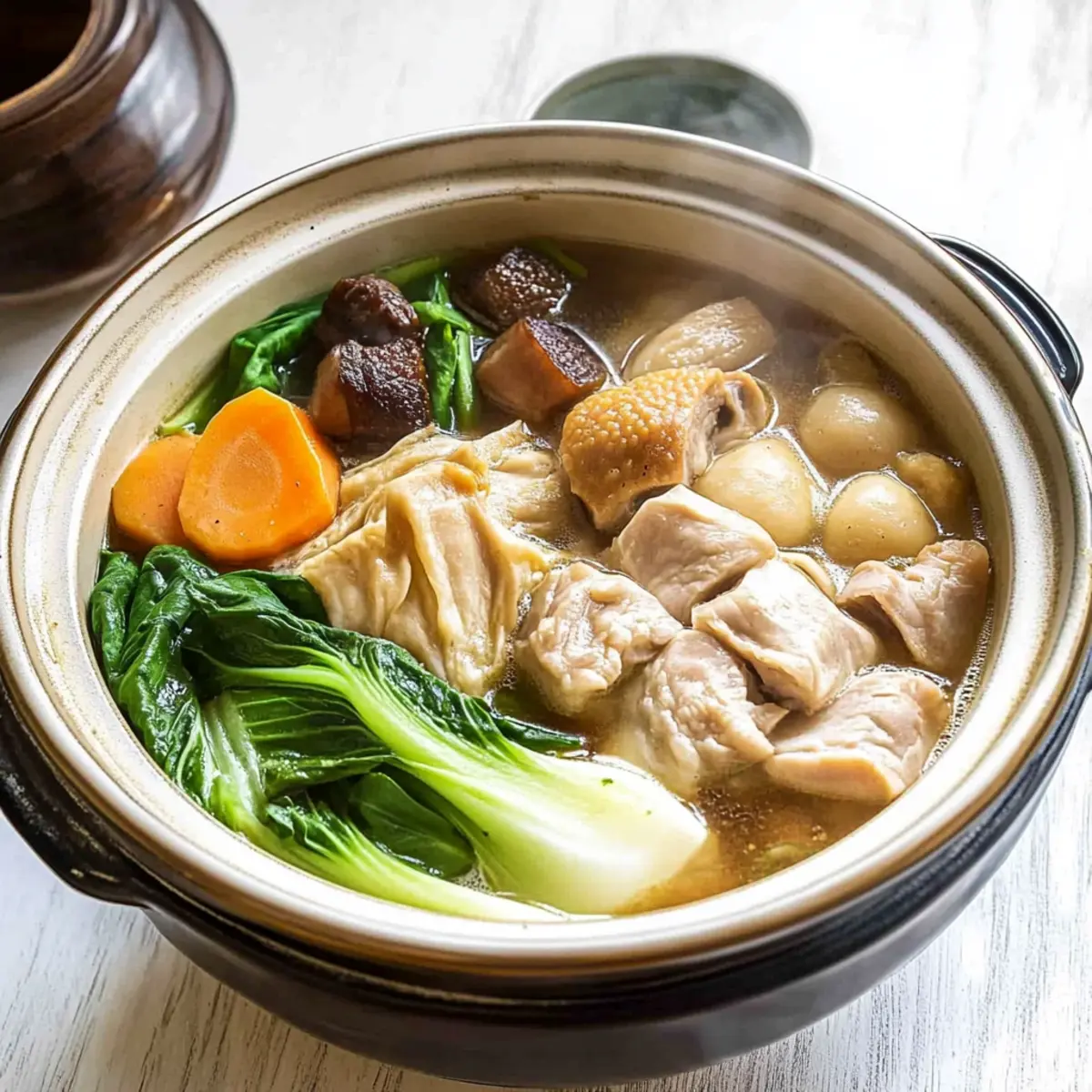
Chanko Nabe: Satisfying Sumo Wrestler’s Hot Pot Recipe
Ingredients
Equipment
Method
- Begin by soaking the konbu in cold water for at least 30 minutes. In a pot, bring 4 quarts of water to a boil, add the chicken carcass, and skim off any foam. Simmer for 30 to 60 minutes.
- Strain the broth through a fine mesh sieve into a clean pot to remove chicken and impurities. Heat the strained broth to a simmer, then stir in the cooking sake, salt, mirin, soy sauce, grated garlic, and ginger. Adjust seasoning.
- Wash and chop your vegetables and proteins into bite-sized pieces. Slice bok choy, carrots, and mushrooms, and form your tsukune balls.
- With the broth at a simmer, add in the tsukune balls and pork belly, cooking for about 5-7 minutes. Then add the remaining vegetables and cook for an additional 4-5 minutes.
- Serve Chanko Nabe right from the pot or ladle into bowls. For an extra touch, add cooked rice or noodles to leftover broth.
Leave a Reply