
As the sizzling sound of garlic fills your kitchen, you know you’re about to embark on a culinary adventure. This recipe for Hibachi Zucchini brings the spirit of Japanese teppanyaki right to your home, transforming simple vegetables into a spectacular side dish. Not only is it quick and easy to prepare in under 20 minutes, but this vibrant delight also shines with incredible flavors, making it perfect for busy weeknights or to impress your friends at your next dinner gathering. Imagine a tender-crisp medley of zucchini and onions, enhanced with soy sauce and a hint of sesame oil, creating an umami explosion that pairs beautifully with grilled meats or can even stand alone as a delightful vegetarian option. Are you ready to add this delicious dish to your weekly meal rotation?
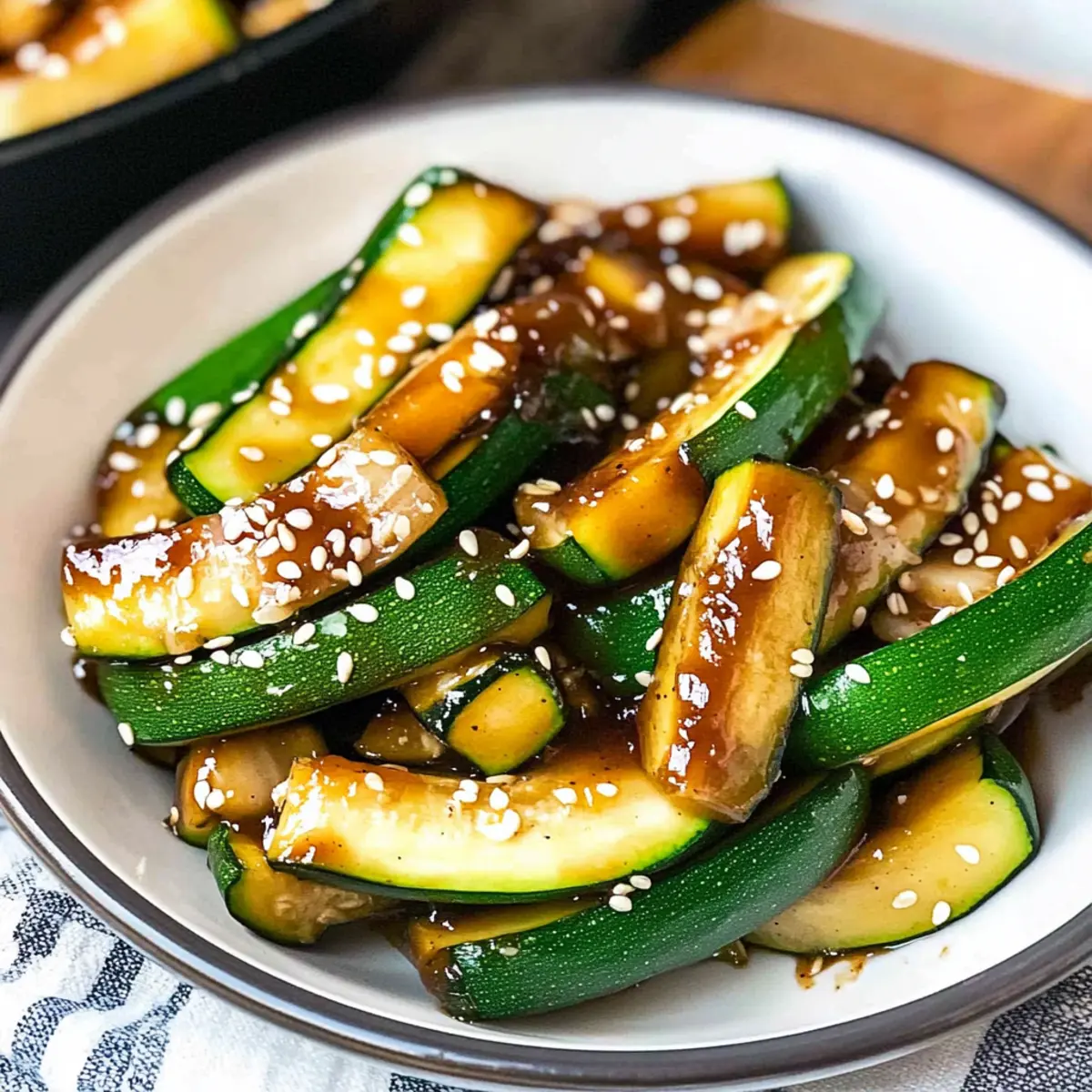
What makes this Hibachi Zucchini special?
Quick and Easy: This recipe is perfect for those chaotic weeknights, needing just 20 minutes from prep to plate.
Bold Flavors: The blissful mix of garlic, ginger, and soy sauce elevates the extensive taste profile, making every bite a delight.
Versatile Side Dish: Pair it with hibachi-style fried rice or serve it alongside grilled meats for a complete meal.
Healthy Choice: Packed with nutrients, this dish is a guilt-free indulgence that enhances your balanced diet without compromising flavor.
Culinary Adventure: Bring a taste of Japan to your kitchen and impress your friends with restaurant-quality fare right at home.
Customization Option: Feel free to toss in your favorite veggies or try variations like mushrooms to keep things exciting!
Hibachi Zucchini Ingredients
For the Vegetables
- Zucchini – use medium zucchinis for optimal texture and moisture retention.
- Onion – adds a hint of sweetness; substitute with shallots for a milder taste.
For the Aromatics
- Garlic – fresh minced garlic is preferred for its strong aroma; powdered garlic can be used in a pinch.
- Ginger – fresh ginger adds a spicy warmth; ground ginger can be used as a substitute (use less).
For Cooking
- Vegetable Oil – suitable for sautéing; sesame oil can be used for an extra boost of flavor.
- Soy Sauce – enhances umami and saltiness; tamari works well for a gluten-free version.
- Sesame Oil – just a splash elevates the richness of this Hibachi Zucchini dish.
For the Finish
- Sesame Seeds – adds a nutty crunch; optional substitute can be chopped nuts if needed.
- Salt – enhances overall flavor; adjust to taste as needed.
- Black Pepper – offers a subtle kick; you can omit it for a milder flavor.
Step‑by‑Step Instructions for Hibachi Zucchini
Step 1: Prep the Veggies
Begin by washing your medium zucchinis and slicing them into half-inch square sticks, about 2-3 inches long. Next, quarter and half-slice a medium onion to ensure it cooks evenly. Have all your ingredients ready, as this quick Hibachi Zucchini dish comes together quickly once you start cooking.
Step 2: Heat the Pan
Place your sauté pan or wok over medium-high heat and allow it to preheat until shimmering, usually about 2-3 minutes. This step is essential for achieving the perfect tender-crisp texture in your vegetables. You should notice a slight haze rising from the pan — this means it’s ready for cooking.
Step 3: Cook Onions
Add the sliced onions to the hot pan and sauté for about 2 minutes, stirring frequently, until they become softened and slightly translucent. This will create a sweet base for your Hibachi Zucchini, allowing the flavors to meld beautifully. Keep an eye on them to prevent burning.
Step 4: Add Aromatics
Stir in the minced garlic and freshly grated ginger, cooking them for about 30 seconds. You’ll know they’re ready when the pan is filled with a fragrant aroma. This aromatic blend enhances the overall flavor profile of the Hibachi Zucchini, adding a delicious depth to the dish.
Step 5: Add Zucchini
Incorporate the zucchini sticks into the pan, sautéing them for 4-5 minutes. Make sure to stir occasionally, allowing the zucchini to brown slightly while remaining tender-crisp in texture. Watch closely until they take on a slight golden color — that’s when they’re just right.
Step 6: Season
Drizzle soy sauce and sesame oil over the sautéed zucchini, then sprinkle with salt, pepper, and sesame seeds. Continue sautéing for an additional minute until the zucchini is coated and flavorful. You’ll see the glossy sheen of the sauces enveloping the veggies, signaling they’re nearly done.
Step 7: Serve
Transfer your flavorful Hibachi Zucchini to a serving platter, ready to complement your fried rice or grilled proteins. This dish is versatile enough to shine on its own or as a vibrant side, enhancing any meal with its delicious aroma and colorful presentation.
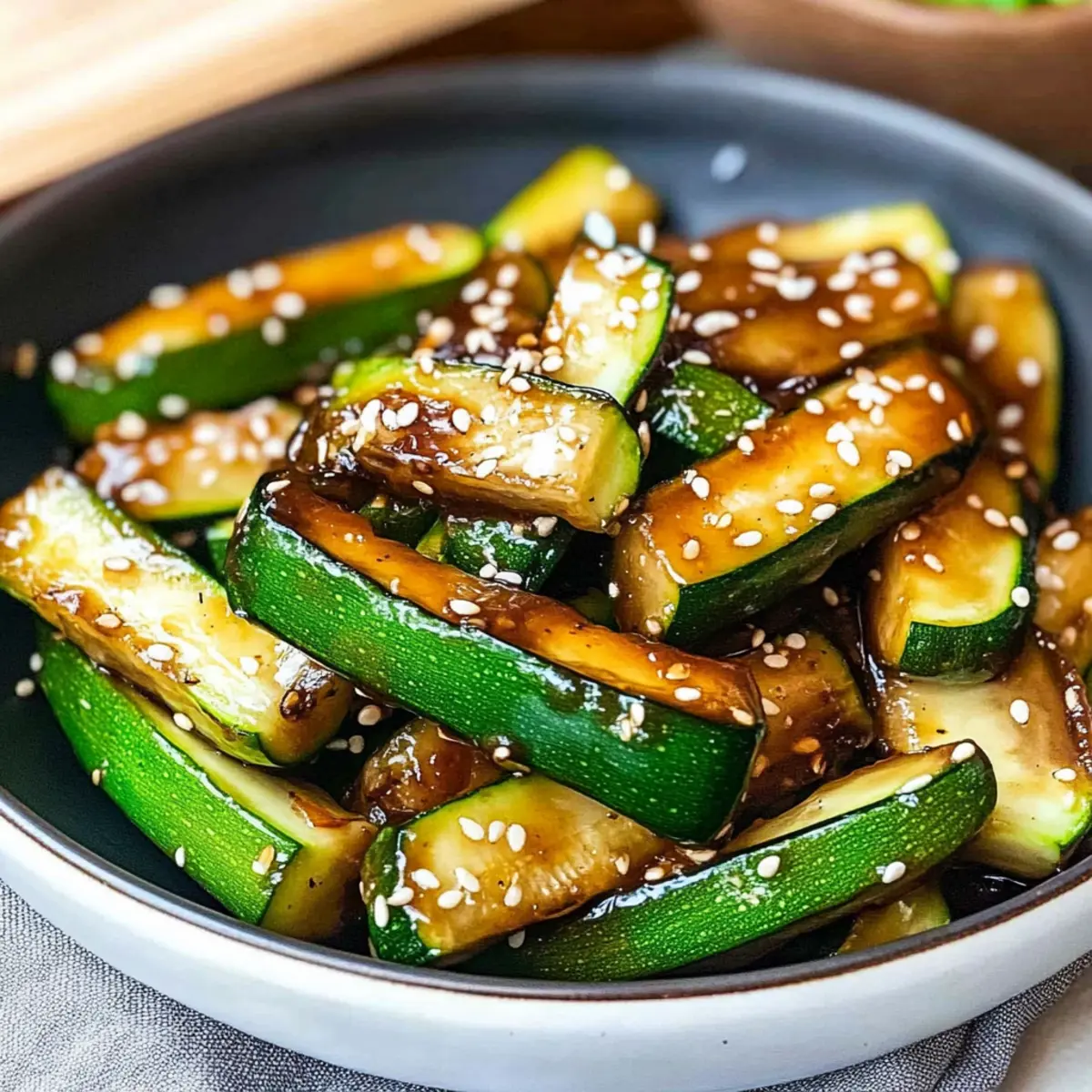
Hibachi Zucchini Variations & Substitutions
Feel free to play with this recipe and make it your own, exploring different tastes and textures in every bite!
- Mushroom Mix: Add sliced mushrooms for an earthy flavor that complements the zucchini beautifully. They’ll absorb the savory sauce, enhancing the dish’s umami notes.
- Bell Pepper Burst: Toss in colorful bell peppers for a sweet crunch and vibrant presentation. They add a lovely flavor contrast and make your dish even more visually appealing.
- Asparagus Addition: Swap zucchini for asparagus if you’re in the mood for something different. Just sauté until tender-crisp for a delightful twist. This tender green brings a fresh feel to the dish.
- Spicy Kick: Add a pinch of red pepper flakes while cooking for a subtle heat. This can elevate the overall flavor profile, giving your Hibachi Zucchini a zesty kick!
- Garlic Lover’s Dream: Increase the amount of garlic for those who adore its aroma. More garlic elevates the dish to another level, making it even more irresistible to your palate.
- Nutty Flavor: Substitute sesame seeds with chopped walnuts or almonds for an extra crunch and nutty flavor. This unique twist can transform your dish into something even more special.
- Herb Infusion: Try adding fresh herbs like cilantro or chives at the end, which can enhance freshness. This aromatic touch will brighten the flavors, making each bite delightful.
- Soy Sauce Swap: Use coconut aminos as a low-sodium, soy-free alternative, which will still deliver a satisfying savory flavor. This swap ensures every dietary need is considered while still tasting heavenly.
For additional ideas, don’t hesitate to check out our quick vegetable stir-fry guide or explore how to enhance your meals with flavorful sesame oil recipes!
What to Serve with Hibachi Zucchini
Create a delightful meal that enchants your senses and satisfies your cravings.
- Hibachi Fried Rice: Light, fluffy rice cooked with vegetables and soy sauce offers a comforting base that perfectly complements the zucchini’s crispness.
- Grilled Chicken: Juicy, marinated chicken adds protein and a smoky flavor that pairs beautifully with the vibrant taste of the zucchini.
- Teriyaki Salmon: The rich, sweet teriyaki glaze on flaky salmon enhances the umami profile, making each bite a flavorful adventure.
- Miso Soup: This warm and savory broth brings a soothing contrast, warming you up while highlighting the Japanese theme of your meal.
- Edamame: These tender, salty soybeans provide a fun and healthful side that balances the meal’s flavors while being packed with protein.
- Cucumber Salad: A refreshing, crunchy salad dressed in sesame vinaigrette cleanses the palate between bites and offers a bright contrast to the savory vegetables.
- Sake or Green Tea: Cheers to your culinary journey! An icy glass of sake or a warm cup of green tea complements the meal’s flavors and adds an authentic touch.
- Mochi Ice Cream: For dessert, these sweet, chewy treats filled with ice cream are a delightful way to end your meal on a satisfying note.
Make Ahead Options
These Hibachi Zucchini are perfect for meal prep, allowing you to enjoy flavorful, home-cooked goodness even on your busiest days! You can slice the zucchini and onion up to 24 hours in advance, storing them in an airtight container in the refrigerator to maintain their crispness. The garlic and ginger can also be minced beforehand — just be sure to keep them separated to preserve their potency. When it’s time to serve, simply heat a pan, add your aromatics, toss in the zucchini and onions, and finish with soy sauce and sesame oil. You’ll have a delightful side dish ready without the stress, making dinner time a breeze!
Expert Tips for Hibachi Zucchini
- Heat Matters: Ensure your sauté pan is hot enough before adding the vegetables; this prevents sogginess and enhances texture.
- Consistent Stirring: Stir frequently to evenly cook the zucchini and avoid burning those aromatic garlic and ginger notes.
- Right Brownness: Let zucchini brown slightly to develop a richer flavor; overcooking can lead to mushiness.
- Fresh Ingredients: Using fresh garlic and ginger significantly enhances the taste of your Hibachi Zucchini; avoid substitutes when possible.
- Store Wisely: For leftovers, separate the zucchini from the sauces to maintain freshness and prevent sogginess.
Storage Tips for Hibachi Zucchini
Fridge: Store in an airtight container for up to 3-4 days. This keeps your Hibachi Zucchini fresh and ready to enjoy later.
Freezer: For longer storage, freeze the hibachi zucchini for up to 2 months. Make sure to cool it completely, then place it in freezer-safe bags, removing as much air as possible.
Reheating: Reheat leftovers in a skillet over medium heat, stirring occasionally, or in the microwave in short intervals until warmed through. This preserves its tender-crisp texture.
Avoid Sogginess: To maintain the quality, store leftover zucchini separately from any sauces or proteins. This prevents them from becoming soggy and helps retain their delightful flavors.
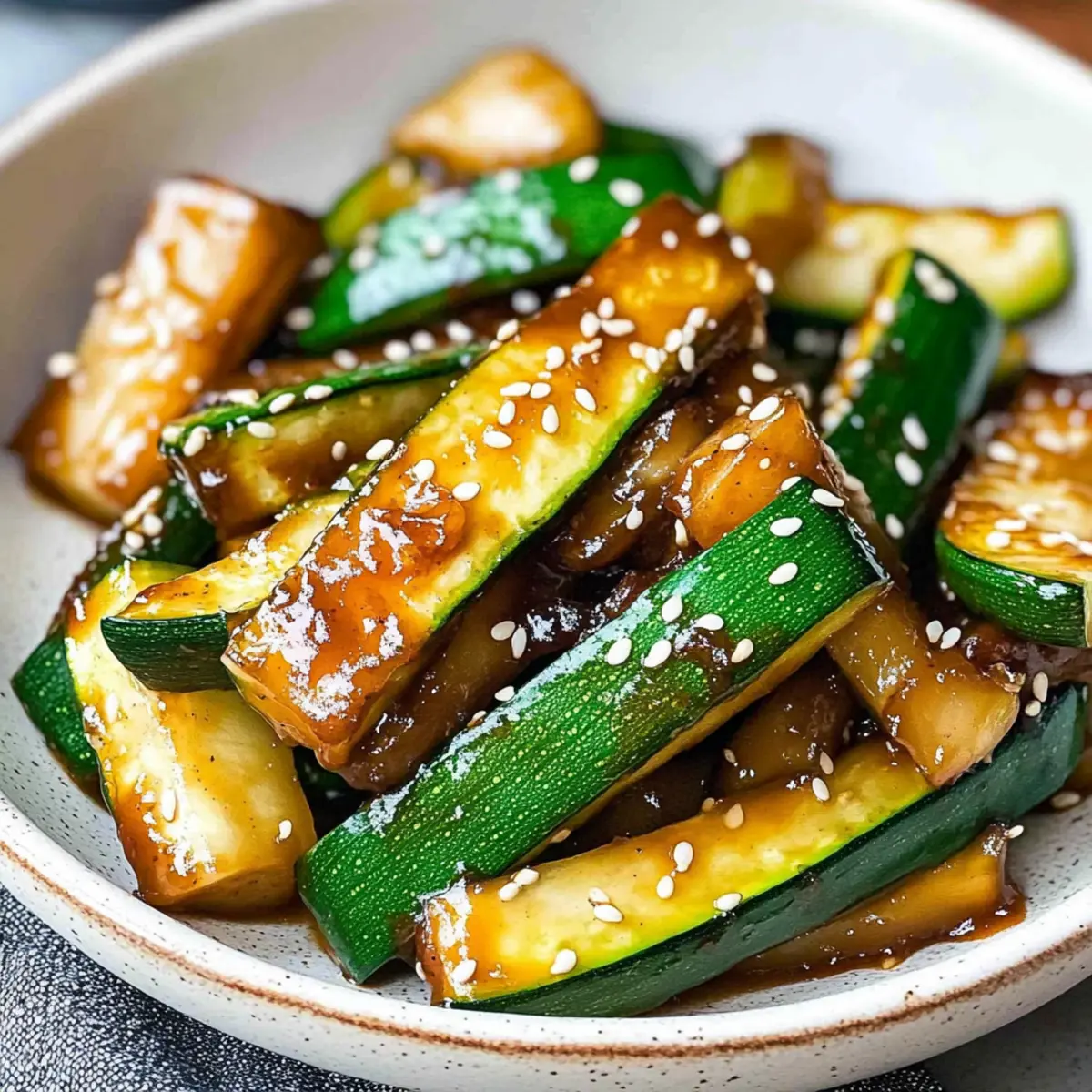
Hibachi Zucchini Recipe FAQs
What type of zucchini should I use for Hibachi Zucchini?
I recommend using medium zucchinis for optimal texture and moisture retention. They shouldn’t be too small or too large—look for ones that feel firm and heavy for their size!
How should I store leftover Hibachi Zucchini?
To keep your Hibachi Zucchini fresh, store it in an airtight container in the refrigerator for up to 3-4 days. Ensure it’s cooled down before placing it in the fridge. When reheating, I suggest using a skillet over medium heat to help retain that delightful, tender-crisp texture.
Can I freeze Hibachi Zucchini?
Absolutely! You can freeze Hibachi Zucchini for up to 2 months. Let it cool completely after cooking, then place it in freezer-safe bags—be sure to press out as much air as possible. When you’re ready to enjoy it, thaw overnight in the fridge and then reheat in a skillet for the best results.
How can I prevent my zucchini from getting soggy when cooking?
Great question! The key is to ensure your sauté pan is hot before adding the zucchini. I often preheat the pan for about 2-3 minutes until it’s shimmering. Stir frequently to prevent overcooking, and allow the zucchini to brown slightly, which adds flavor and keeps it from becoming mushy.
Is Hibachi Zucchini safe for pets or people with allergies?
While Hibachi Zucchini is generally safe for most people, it’s always good to consider any allergies. This dish contains garlic and soy sauce, which can affect some individuals. If you have a pet, it’s best to avoid letting them eat it due to the garlic, which can be harmful to them. Always consult with a health professional if unsure about ingredients.
Can I add other vegetables to my Hibachi Zucchini?
The more the merrier! Feel free to customize your dish by adding other vegetables like bell peppers or mushrooms—just adjust the cooking time slightly so everything is tender-crisp and cooked through. Enjoy experimenting!
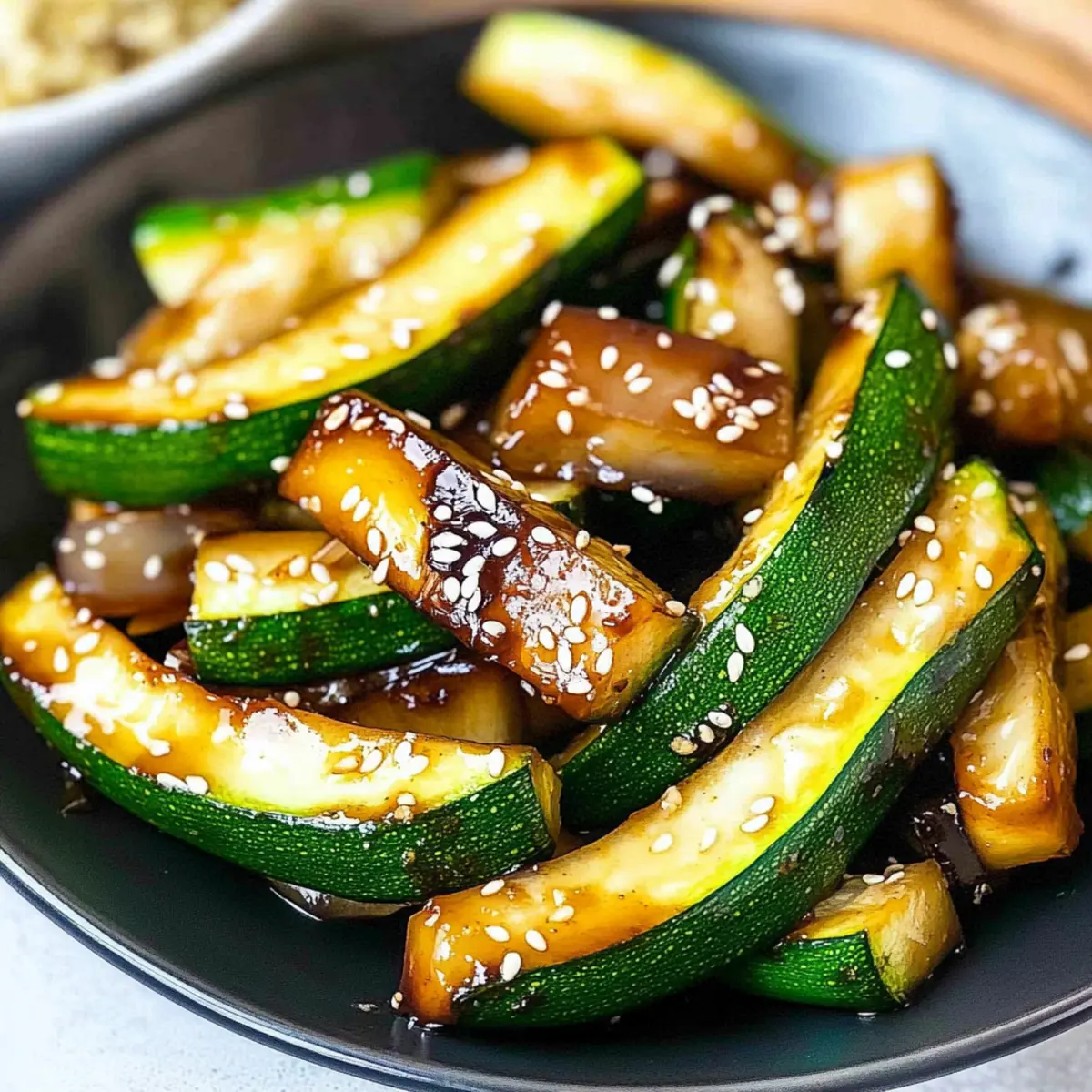
Delicious Hibachi Zucchini: Quick and Flavorful Weeknight Side
Ingredients
Equipment
Method
- Begin by washing your medium zucchinis and slicing them into half-inch square sticks, about 2-3 inches long. Quarter and half-slice the onion.
- Place your sauté pan or wok over medium-high heat and allow it to preheat until shimmering, usually about 2-3 minutes.
- Add the sliced onions to the hot pan and sauté for about 2 minutes, stirring frequently, until they become softened and slightly translucent.
- Stir in the minced garlic and freshly grated ginger, cooking them for about 30 seconds until aromatic.
- Incorporate the zucchini sticks into the pan, sautéing them for 4-5 minutes until slightly browned and tender-crisp.
- Drizzle soy sauce and sesame oil over the zucchini, then sprinkle with salt, pepper, and sesame seeds, sautéing for an additional minute.
- Transfer the flavorful Hibachi Zucchini to a serving platter, ready to complement your meal.
Leave a Reply