
As I sipped the warm broth, I could almost hear laughter echoing from a bustling Korean kitchen—each spoonful of Vegan Korean Radish Soup (Mu Guk) bringing a piece of that vibrant culture into my home. This comforting one-pot dish features tender daikon radish simmered in a savory kombu-garlic broth, proving that a soothing vegan meal can be just as satisfying as any traditional fare. Not only is it easy to whip up in under thirty minutes, but it’s also gluten-free and packed with nutrients, making it the perfect solution for busy weeknights. Whether you’re a seasoned home-cook or just looking to elevate your weeknight meals, this soup is a delightful way to embrace healthy eating without sacrificing flavor. Ready to discover a hearty recipe that will make your taste buds dance? Let’s get cooking!
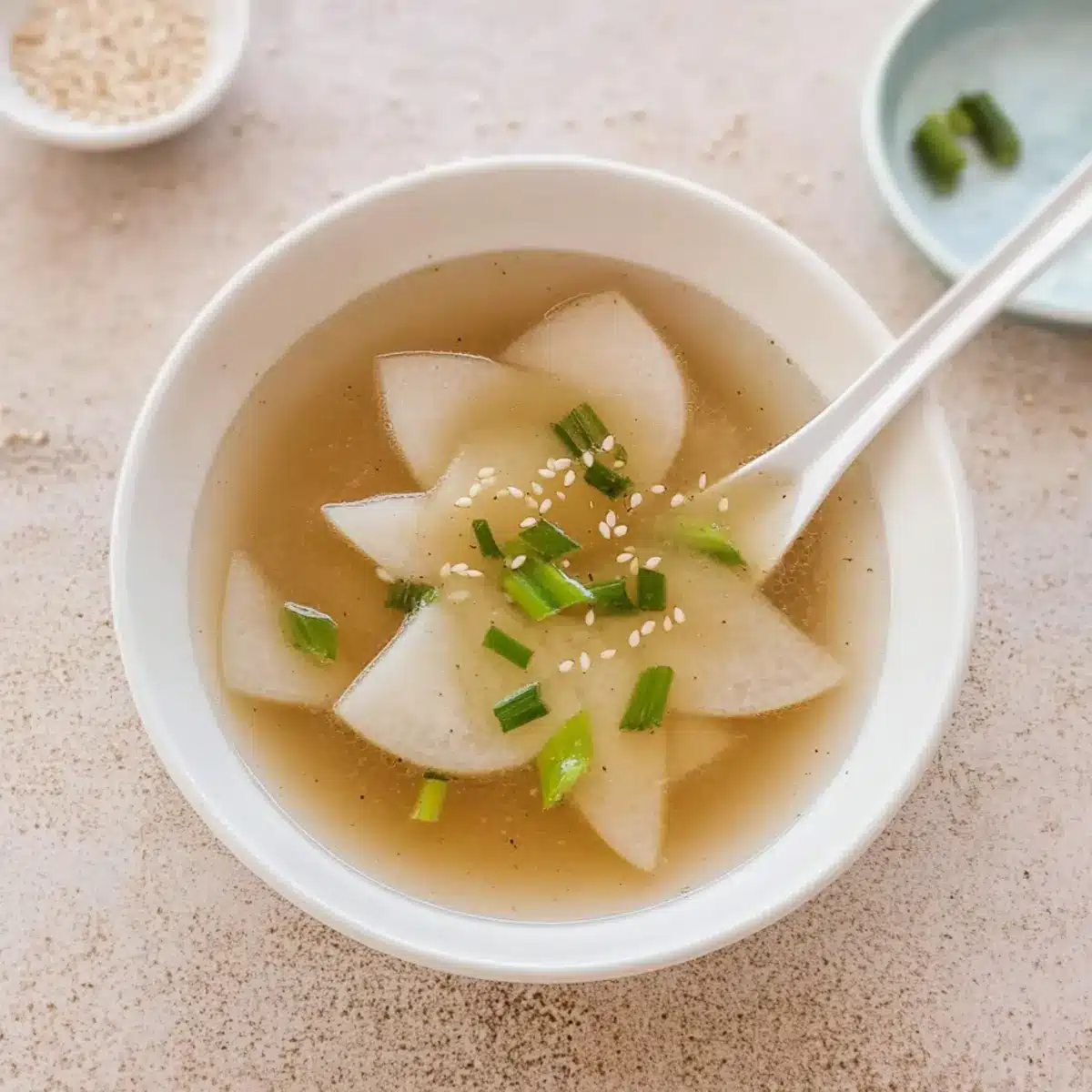
What makes this soup so comforting?
**Comforting **: This Korean Radish Soup (Mu Guk) wraps you in warmth with its savory broth, reminiscent of cherished family meals.
**Nutrient-Packed **: Filled with vitamins and minerals, it supports your health while satisfying your craving for comfort food.
**One-Pot Wonder **: Say goodbye to complicated clean-ups; everything cooks together, saving you time and effort.
**Vegan and Gluten-Free **: Perfect for everyone at your table, this soup caters to various dietary needs without sacrificing flavor.
**Endless Customization **: Add tofu or veggies for a personal twist—tailor each bowl to your liking! Enjoy this delightful recipe to elevate your weeknight dinners or cozy gatherings, just like with my Korean Spicy Chicken or explore the hearty flavors of Korean Bbq Steak.
Korean Radish Soup Ingredients
• Dive into the deliciousness of this Korean Radish Soup (Mu Guk) with essential ingredients.
For the Soup Base
- Korean Radish (Daikon) – The star of the dish, use a large one for the best sweetness and texture.
- Sesame Oil – Provides a rich, nutty flavor that enhances the broth’s depth.
- Water or Vegetable Broth – Acts as the base of the soup, crucial for achieving a well-rounded flavor.
- Kelp/Dashi Kombu – Just a small piece infuses the broth with umami, elevating the overall taste.
- Dried Shiitake Mushroom – Adds an extra layer of umami to the broth, enhancing its savory profile.
For the Flavoring
- Green Onions – Sliced diagonally to add freshness and a slight crunch.
- Garlic – Use minced cloves for robust flavor that permeates the soup.
- Gluten-Free Soy Sauce or Coconut Aminos – Perfect for seasoning; adjust quantity to fit your taste.
- Salt – Essential for enhancing flavors; always season to your liking.
- White Pepper – Optional but adds a subtle warmth to the soup.
Optional Additions
- Vegan “Beef” Alternative – An excellent source of protein while keeping the soup plant-based.
- Sesame Seeds (for garnish) – Adds a delightful crunch and visual appeal when serving.
- Fresh Green Onions (for garnish) – Enhances freshness on top when plating up the soup.
Let’s gather these ingredients and get ready to create a comforting bowl of Korean Radish Soup (Mu Guk) that warms both the body and soul!
Step‑by‑Step Instructions for Korean Radish Soup (Mu Guk)
Step 1: Prepare the Radish
Start by peeling the Korean radish (daikon) and slice it into quarter-inch thick pieces. Then, cut those slices into triangle shapes, keeping them uniform for even cooking. Set aside the prepared radish while you gather the remaining ingredients and get ready for the next steps in making your Korean Radish Soup (Mu Guk).
Step 2: Sauté the Radish
In a large pot, heat 2 tablespoons of sesame oil over medium-high heat. Once the oil is shimmering, add the diced radish and sauté for about 2-3 minutes, stirring occasionally until the radish becomes slightly translucent. This will develop a warm, inviting aroma, laying the foundation for your flavorful Korean Radish Soup.
Step 3: Add Aromatics
Next, introduce the sliced green onions to the pot, continuing to sauté for an additional 2-3 minutes. The green onions should soften and become fragrant, melding beautifully with the sautéed radish. This step enhances the taste profile of your Korean Radish Soup, creating a vibrant base packed with flavor.
Step 4: Incorporate Broth Ingredients
Now, add a piece of kombu, the dried shiitake mushroom, and minced garlic into the pot. Pour in 6 cups of water or vegetable broth, stirring gently to combine all the flavors. Bring the mixture to a boil, and once bubbling, you’ll notice the enticing aromas filling your kitchen, making it hard to resist this delicious soup.
Step 5: Simmer for Tenderness
Reduce the heat to a low setting and let your Korean Radish Soup simmer for 12-15 minutes. Keep an eye on the radish; it should become tender yet retain a slight bite. This gentle simmer allows all the flavors to meld together, creating a rich, savory broth brimming with goodness.
Step 6: Season to Perfection
After simmering, stir in gluten-free soy sauce or coconut aminos, along with salt to taste. Allow the soup to simmer for an additional 3 minutes, adjusting the seasoning as needed. At this point, your kitchen should be filled with mouthwatering scents, signaling that your Korean Radish Soup is nearly complete.
Step 7: Serve and Garnish
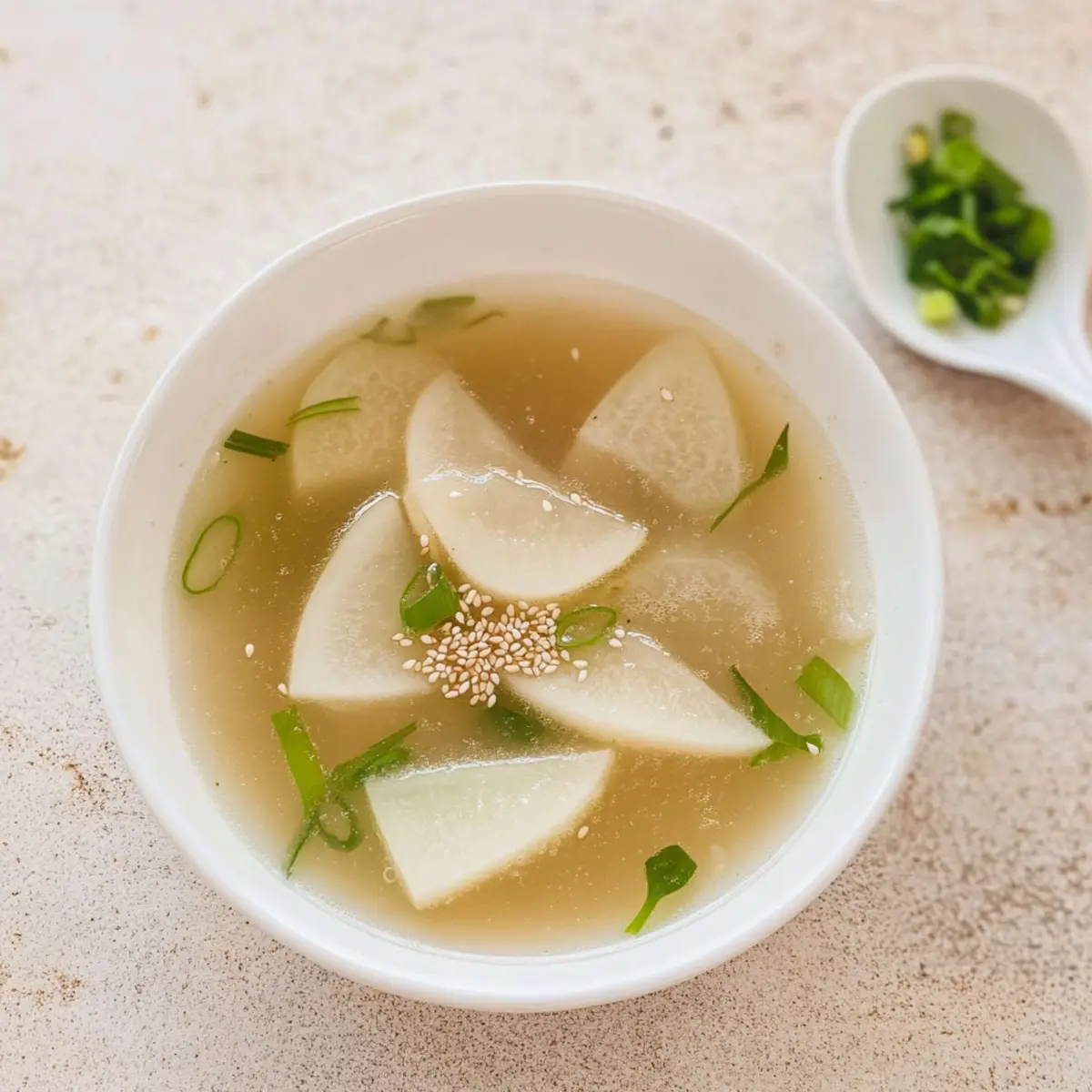
Once the soup is done, ladle the Korean Radish Soup into bowls. Garnish with a sprinkle of sesame seeds and freshly sliced green onions for an added crunch and pop of color. This final touch elevates your dish, making it a feast for both the eyes and the palate. Enjoy your warming bowl of comfort!
What to Serve with Korean Radish Soup (Mu Guk)
As you savor every spoonful of this nourishing soup, consider these delightful pairings that will elevate your meal experience.
-
Steamed White Rice: A staple in Korean cuisine, it balances the savory flavors of the soup and absorbs every drop of the broth.
-
Korean Pancakes: Serve crispy, savory pancakes on the side for a delightful textural contrast that complements the soup’s warmth.
-
Kimchi: A crunchy, tangy addition that enhances the umami notes in the soup while providing a probiotic boost to your meal.
-
Roasted Vegetables: Try a medley of seasonal vegetables like carrots and broccoli for a colorful, nutrient-packed side that adds sweetness.
-
Sesame Noodles: Tossed in a light soy sauce dressing, these smooth noodles offer a perfect complement in flavor and texture, making every bite a joy.
-
Cucumber Salad: A fresh, crispy cucumber salad dressed with rice vinegar adds a refreshing note that balances the savory soup beautifully.
-
Herbal Tea: A warm cup of green or herbal tea helps cleanse the palate and rounds out the comforting feeling as you enjoy the soup.
These pairings will make your dining experience even more heartwarming and satisfying. Enjoy!
Expert Tips for Korean Radish Soup
- Choose the Right Radish: Ensure you select a large, sweet Korean radish (daikon), as smaller varieties can be overly spicy and less flavorful in your soup.
- Layer Flavors: Sauté the radish and aromatics first to build a robust flavor base, setting the stage for a rich Korean Radish Soup that delights the taste buds.
- Simmer Carefully: Watch the cooking time to ensure the radish is tender but retains some bite—overcooking can lead to a mushy texture.
- Customize: Feel free to add additional protein sources like tofu or a vegan “beef” alternative without compromising the soup’s plant-based integrity.
- Rest for Flavor: If possible, let the soup sit overnight in the fridge; it often tastes even better the next day as the flavors meld beautifully.
Make Ahead Options
This Vegan Korean Radish Soup (Mu Guk) is an excellent choice for meal prep! You can slice and store the daikon radish and green onions up to 24 hours in advance, keeping them in an airtight container in the refrigerator to maintain their freshness. The broth ingredients—kombu, shiitake mushrooms, and garlic—can also be pre-measured and stored together for an even quicker assembly. When you’re ready to enjoy this cozy soup, simply sauté the prepped radish and onions, add the broth, and simmer for about 15 minutes. With these prep tips, you’ll have a delightful meal ready with minimal effort, just as delicious as when made fresh!
How to Store and Freeze Korean Radish Soup
- Refrigerator: Store leftovers in an airtight container for up to 4 days. Simply reheat in a pot over medium heat or microwave until warmed through.
- Freezer: Use a freezer-safe, airtight container to freeze Korean Radish Soup for up to 3 months. This ensures the flavors stay intact while allowing you to enjoy this comforting vegan dish later.
- Thawing: When ready to enjoy, thaw overnight in the refrigerator before reheating. For quick thawing, place the container in cold water.
- Reheating: Reheat gently on the stovetop or microwave, adding a splash of water or broth if the soup has thickened during storage.
Korean Radish Soup (Mu Guk) Variations
Feel free to explore your creativity and make this comforting soup your own with a few easy substitutions and additions!
-
Meat-Free Protein: Add tofu or seitan for a protein boost, giving your soup extra bite and richness.
-
More Veggies: Toss in carrots or shiitake mushrooms for added sweetness and texture—don’t hesitate to make it a veggie fiesta!
-
Spicy Kick: If you crave heat, add sliced jalapeños or a dash of gochujang for a spicy flavor that pairs beautifully with the broth.
-
Herbal Twist: Experiment with fresh cilantro or basil as a garnish for a vibrant, aromatic twist—these herbs can elevate the entire dish.
-
Creamy Finish: Incorporate coconut milk towards the end of cooking for a creamy texture and a subtly sweet finish—this makes every spoonful feel lavish!
-
Extra Umami: For even more depth, mix in a splash of miso paste or a spoonful of nutritional yeast—both enrich the umami flavor profile!
-
Broth Variations: Instead of water, use your favorite flavored broth or stock—this can dramatically enhance the overall taste.
-
Vegan “Chicken” Addition: For those wanting a heartier meal, toss in vegan “chicken” strips sautéed alongside the radish for added substance.
Feel inspired by these variations and let your taste buds guide you! By trying different combinations, you’ll find the perfect rendition of this classic that suits your palate. If you love a hearty, elevated meal, check out my delicious Korean Ground Beef as a side or a beautiful pairing with your soup!
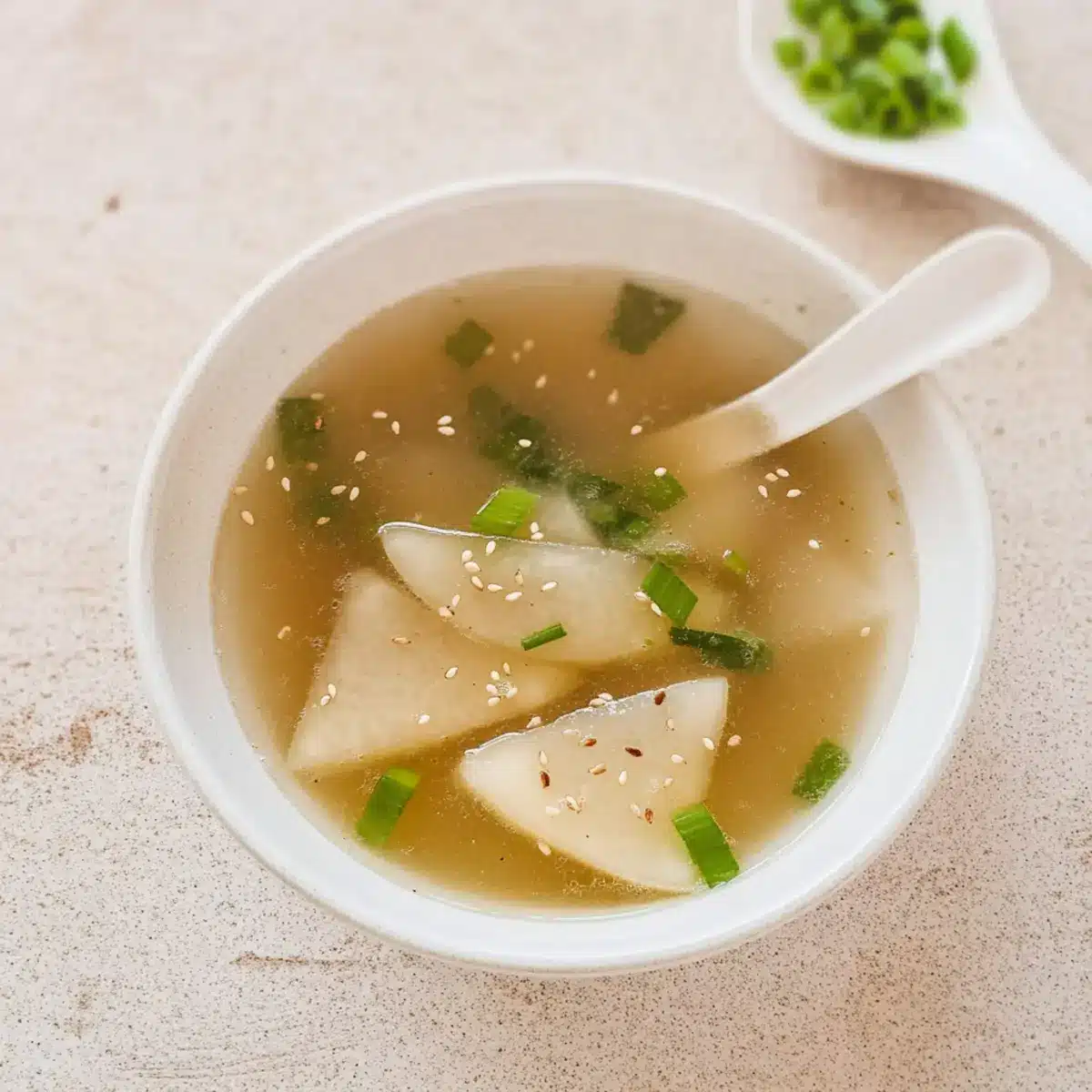
Korean Radish Soup (Mu Guk) Recipe FAQs
What kind of radish should I use for this soup?
Absolutely! For the best flavor and texture, choose a large Korean radish (daikon). Avoid smaller, spicier varieties that may not provide the sweetness and tenderness you want in your Korean Radish Soup (Mu Guk). Look for radishes that are firm and smooth, without any dark spots or blemishes.
How long can I store leftovers of the Korean Radish Soup?
You can store leftover soup in an airtight container in the refrigerator for up to 4 days. Just remember to reheat it on the stove or in the microwave until piping hot before serving again. The wonderful flavors will still be intact!
Can I freeze Korean Radish Soup?
Very much! To freeze, allow the soup to cool completely, then transfer it to a freezer-safe, airtight container. It can last up to 3 months in the freezer. When you’re ready to enjoy it, thaw overnight in the refrigerator, or place the container in cold water for quicker results. Reheat gently on the stove, and if it appears thick, add a splash of water or broth to loosen it up.
What if my Korean Radish Soup is too salty?
If you find that your soup is too salty, don’t worry! You can balance out the flavor by adding more water or vegetable broth to dilute the saltiness. Consider throwing in a few diced potatoes or more radish; they will absorb some of the saltiness while providing great texture. Just remember to adjust the seasoning again after this step to make it perfect!
Is this soup suitable for people with allergies?
Very! This Vegan Korean Radish Soup (Mu Guk) is free from common allergens like dairy and gluten, especially when using gluten-free soy sauce or coconut aminos. However, always check the labels of any packaged ingredients for cross-contamination. For specific allergies, like mushrooms, you can easily leave out the shiitake mushrooms or substitute them with another vegetable to enjoy this comforting dish.
How do I add protein to the Korean Radish Soup without meat?
If you’re looking to boost the protein content, I recommend adding tofu or a vegan “beef” alternative. Here’s a step-by-step: First, cut your tofu into bite-sized cubes and sauté them in a pan with some sesame oil until golden brown. Then, add them to the soup during the simmering stage after adding the broth. This not only adds protein but also enhances the texture of your delicious soup!
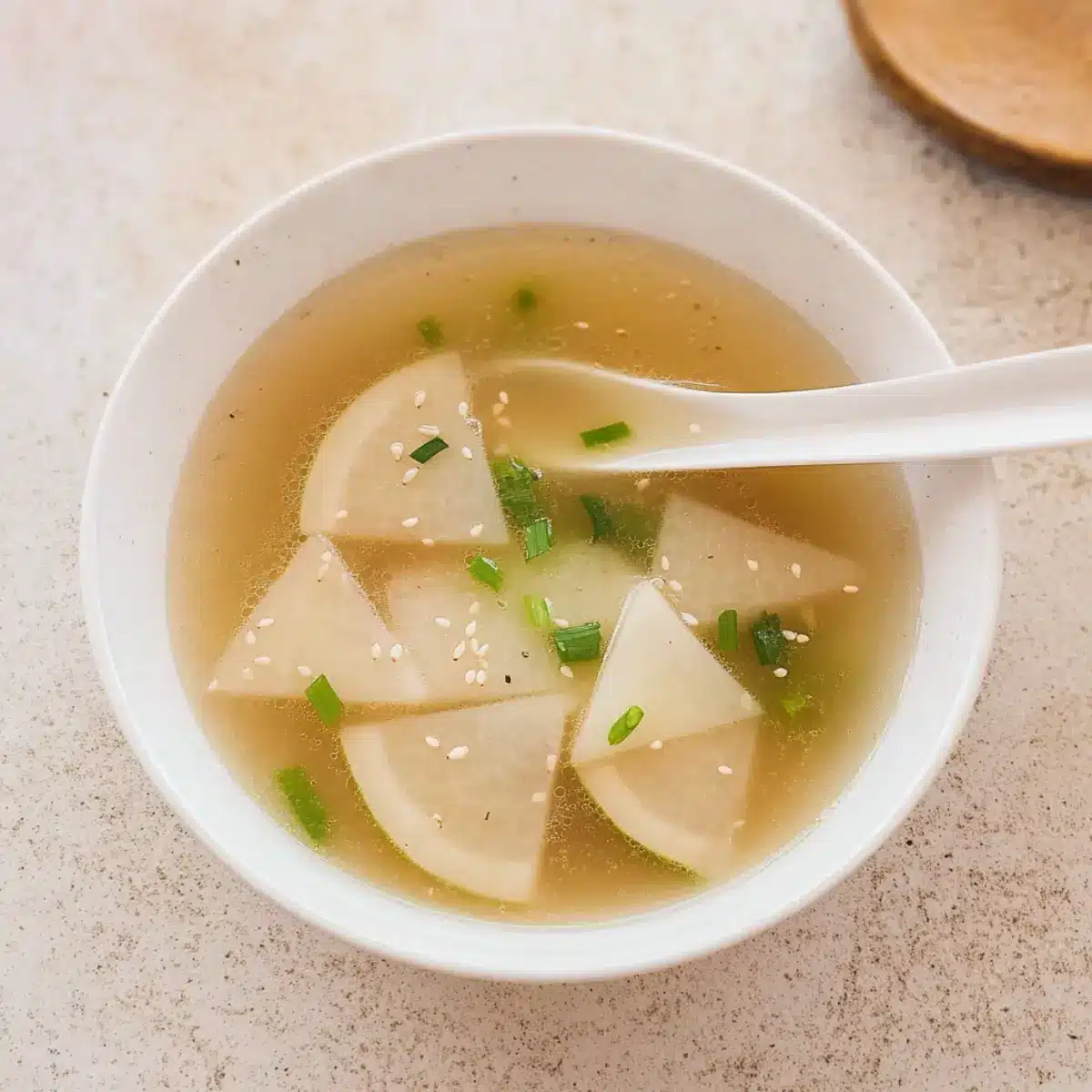
Korean Radish Soup (Mu Guk) - Comfort in Every Spoonful
Ingredients
Equipment
Method
- Prepare the radish by peeling and slicing it into quarter-inch thick pieces, then cut into triangle shapes.
- In a large pot, heat the sesame oil over medium-high heat, add the diced radish and sauté for 2-3 minutes.
- Add sliced green onions to the pot and sauté for an additional 2-3 minutes.
- Introduce kombu, dried shiitake mushroom, and minced garlic, then pour in water or vegetable broth and bring to a boil.
- Reduce heat and let the soup simmer for 12-15 minutes until the radish is tender.
- Stir in gluten-free soy sauce or coconut aminos and season with salt and white pepper as needed.
- Serve the soup in bowls and garnish with sesame seeds and fresh green onions.
Leave a Reply