
The aroma of sizzling vegetables and savory sauce whisked me away to a bustling Japanese street food stall as I set out to create the perfect bowl of Yaki Udon—those delightful Japanese stir-fried noodles everyone adores. This vegan twist offers a quick and satisfying meal that’s as colorful as it is flavorful, ready in just 15 minutes! By swapping in fresh vegetables and hearty tofu, you’ll craft a dish that’s not only nourishing but also effortlessly brings a taste of Asia to your table. Whether you’re looking for a weeknight dinner solution or a hearty lunch, this Yaki Udon is a guaranteed hit for anyone tired of fast food. Are you ready to stir up some deliciousness?
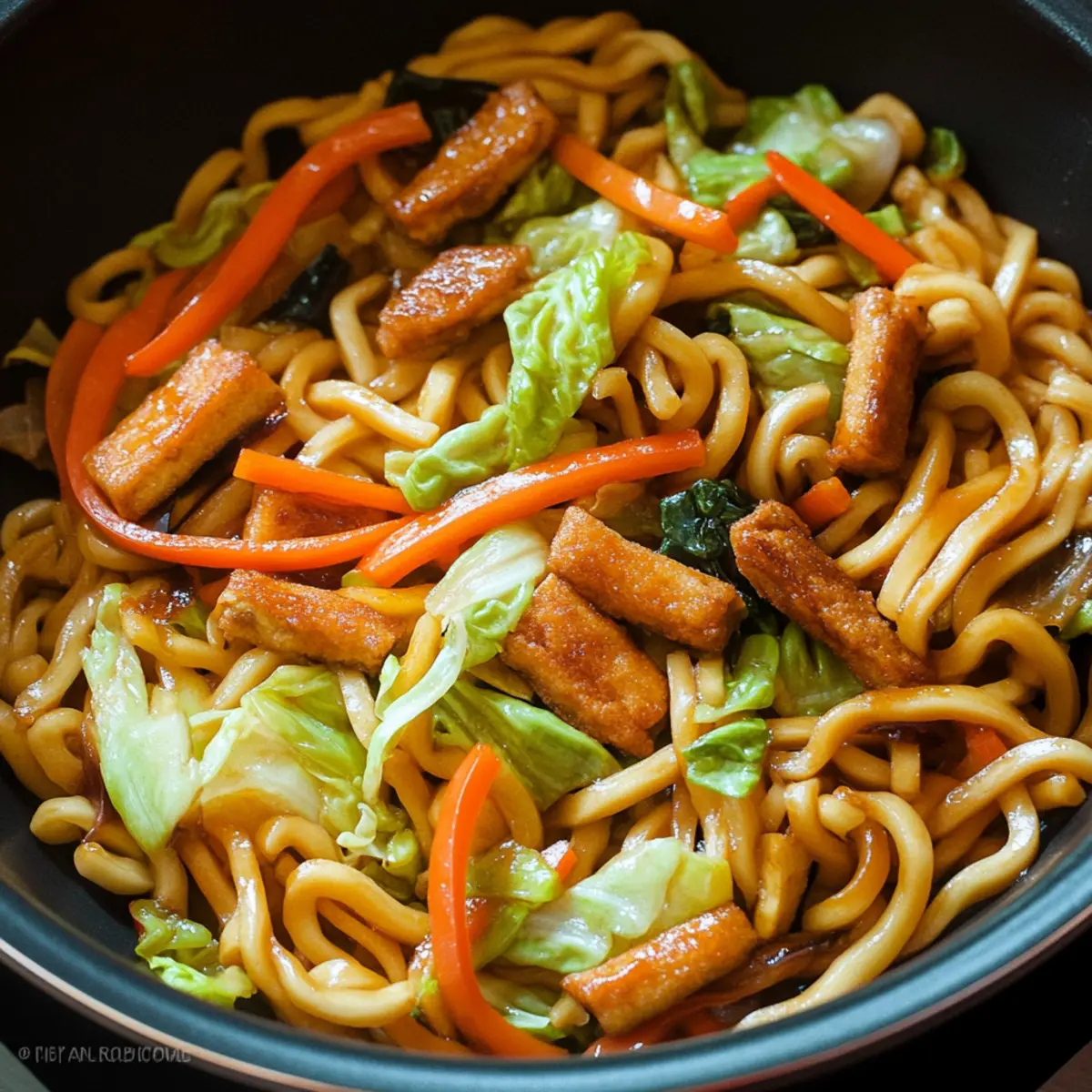
What makes this Yaki Udon special?
Vibrant, Fresh Ingredients: Packed with colorful vegetables, this dish is not only pleasing to the eye but also full of essential nutrients.
Quick and Easy: Just 15 minutes from start to finish, making it perfect for busy weeknights or last-minute lunches.
Umami Flavor Bomb: The combination of soy sauce and shiitake mushrooms delivers a savory taste that’s simply irresistible.
Customizable Delight: Feel free to swap in your favorite veggies or protein sources like tempeh for a personal twist.
Satisfaction Guaranteed: Each bowl is a hearty, filling meal that will please vegans and non-vegans alike! Perfect for sharing or savoring solo. You’ll definitely want to explore more of our other Asian-inspired recipes for cooking variety!
Japanese Stir-Fried Noodles Ingredients
Get ready to whip up a delightful Yaki Udon with these simple ingredients!
For the Noodles
- Udon Noodles – Choose instant fresh udon or frozen sanuki udon for the best texture and convenience.
For the Vegetables
- White Onion – Adds a touch of sweetness; feel free to substitute with yellow onion.
- Carrot – Adds a crunchy sweetness; bell peppers or snap peas work as delicious alternatives.
- Bell Pepper – Choose any variety to bring color and sweetness.
- Cabbage – Offers great texture; bok choy or spinach can be used for different flavors.
- Dried Shiitake Mushrooms – Packed with umami richness; fresh shiitake or any preferred mushrooms can be substituted.
For the Protein
- Extra Firm Tofu – Essential for protein and texture; make sure it’s well-pressed to remove excess moisture.
For the Sauce
- Soy Sauce – The key flavoring agent in this dish; opt for tamari if you need a gluten-free option.
- Rice Vinegar – Adds brightness; lemon juice is a flavorful substitute.
- Tomato Ketchup – Provides a slight sweetness; hoisin sauce is another great alternative.
- Sugar – To balance the savory elements; adjust based on your sweetness preference.
- Vegetarian Mushroom Oyster Sauce – Enriches the depth of flavor; can be replaced with a mix of soy sauce and spices.
For the Garnish
- Chopped Scallions – Add a fresh, vibrant touch as a garnish.
- Sesame Seeds – Optional topping for an extra crunch.
- Shichimi Togarashi – A delightful spice blend to add heat; adjust or omit based on your spice tolerance.
Get your ingredients ready, and let’s bring the deliciousness of Japanese stir-fried noodles to your table!
Step‑by‑Step Instructions for Japanese Stir-Fried Noodles
Step 1: Prep Dried Mushrooms
Begin by soaking the dried shiitake mushrooms in a bowl of boiling water for about 15–20 minutes until they’re fully rehydrated. Once soft, remove them from the water and slice them thinly. Set these aside, keeping the soaking liquid for later if desired for extra flavor. This initial step sets a rich umami base for your Yaki Udon.
Step 2: Cook Tofu
In a large skillet or wok, heat 2 tablespoons of neutral oil over medium-high heat. Once the oil is glistening, add the pressed extra firm tofu cubes. Cook for about 5-7 minutes, turning occasionally, until all sides are golden brown and crispy. Remove the tofu from the pan and set aside on a plate, allowing the oil to flavor the upcoming vegetables.
Step 3: Make Sauce
In a medium bowl, whisk together the soy sauce, rice vinegar, tomato ketchup, sugar, and vegetarian mushroom oyster sauce until well combined. Adjust the consistency by adding pepper to taste. This quick sauce will serve as the flavorful backbone for your stir-fried noodles. Set it aside, ready to saturate your vibrant Yaki Udon.
Step 4: Prepare Noodles
While the tofu cooks, soak or microwave the udon noodles according to the package instructions—this usually takes about 3–5 minutes. Drain the noodles and set them aside. Properly soft yet slightly chewy noodles are essential for a satisfying Yaki Udon experience, so don’t skip this step!
Step 5: Stir-Fry Vegetables
In the now-empty skillet, add a splash more oil if needed and heat it over medium-high heat. Add the sliced white onion and stir-fry for about 2-3 minutes until they begin to soften and become translucent. Next, toss in the bell pepper, carrot, and shiitake mushrooms you prepared earlier. Stir continuously, cooking for another 2-3 minutes—this helps retain their crunch.
Step 6: Add Cabbage and Noodles
Once the vegetables are vibrant and tender, add the chopped cabbage and the drained udon noodles into the skillet. Pour the prepared sauce over everything, ensuring all ingredients are evenly coated. Using tongs, gently toss the mixture together to combine, allowing the flavors to meld for about 2-3 minutes on medium heat.
Step 7: Toss to Combine
Continue to stir-fry for another 3-4 minutes, making sure the noodles soak up the delicious sauce fully. You’ll know it’s done when the noodles are hot, the vegetables are just tender, and an enticing aroma wafts through your kitchen. Adjust the seasoning with salt and pepper as needed to enhance the flavors of your Yaki Udon.
Step 8: Garnish and Serve
To finish, serve your colorful Yaki Udon hot from the pan. Garnish each bowl with a sprinkle of chopped scallions, sesame seeds, and a dash of shichimi togarashi for an extra kick. This beautiful Japanese stir-fried noodles dish is now ready to enjoy, perfect for a quick yet fulfilling meal!
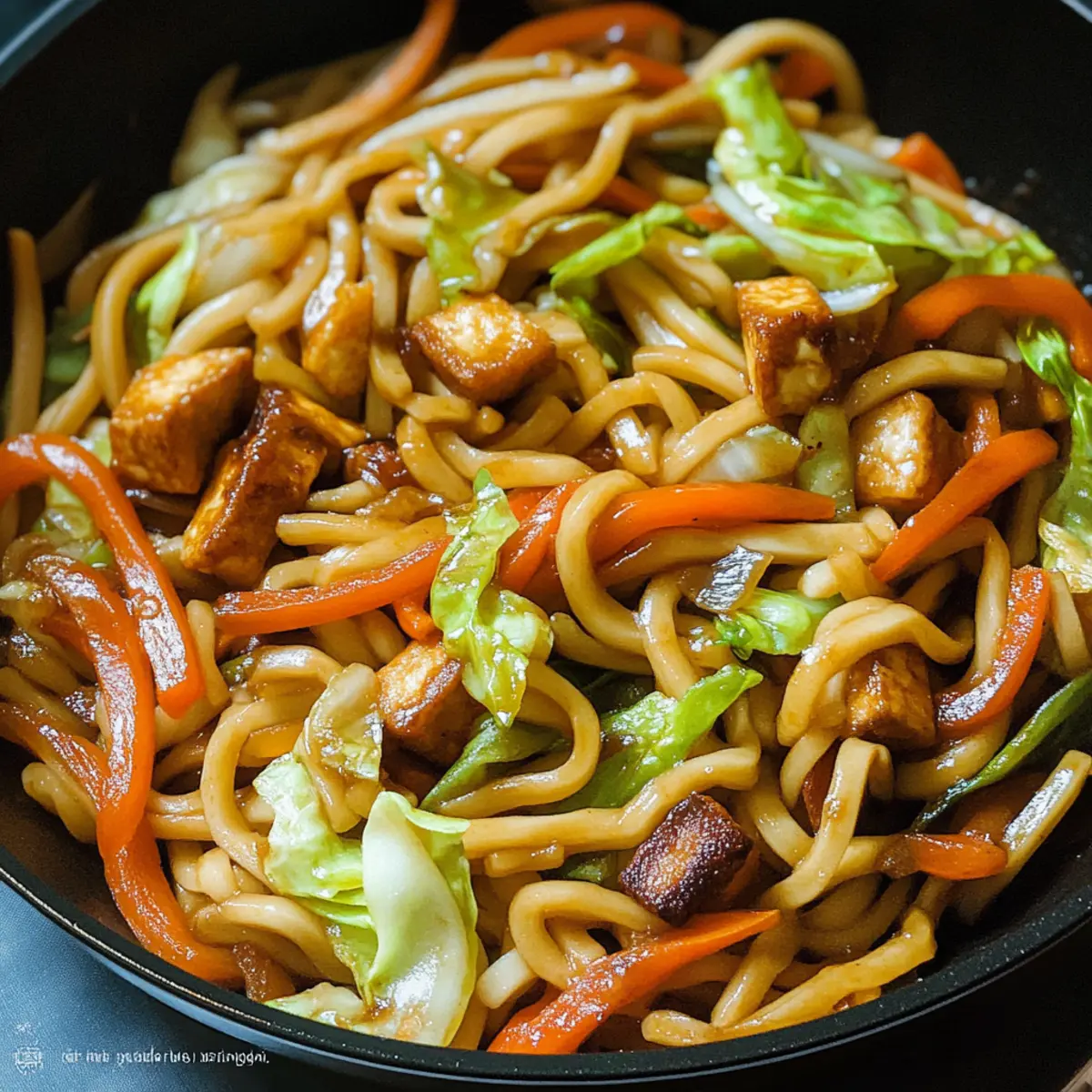
What to Serve with Quick Vegan Yaki Udon Stir-Fry
Bring your meal to life with these delightful side options that elevate your Yaki Udon experience into something truly special.
-
Miso Soup: A warm, comforting bowl of miso soup is the perfect complement, adding a savory depth that pairs beautifully with the richness of udon.
-
Pickled Vegetables: Bright, tangy pickles introduce a refreshing crunch that balances the savory flavors of the stir-fried noodles, adding a delightful contrast.
-
Edamame: These vibrant green soybeans are not just a fun snack; they add protein and a touch of sweetness that harmonizes wonderfully with the saltiness of the Yaki Udon.
-
Cucumber Salad: A light, refreshing cucumber salad dressed in rice vinegar and sesame oil brings a crisp texture and bright flavor, making it an ideal counterpart.
-
Spring Rolls: Serve these fresh or fried, featuring rice paper wrapped around veggies and tofu, offering a crispy bite that contrasts with the softness of the noodles.
-
Coconut Rice: The subtle sweetness of coconut rice pairs exquisitely with the savory Yaki Udon, creating a beautifully cohesive Asian-inspired feast.
-
Green Tea: A warm cup of green tea is the perfect drink to cleanse your palate while enhancing the umami flavors of your dish.
-
Mango Sorbet: End your meal on a sweet note with mango sorbet, a light dessert that offers a fruity finish alongside the richness of your stir-fry.
Make Ahead Options
These Quick Vegan Yaki Udon stir-fried noodles are perfect for making ahead, saving you time during busy weeknights! You can prep the vegetables (sliced onions, bell peppers, carrots, and cabbage) and tofu up to 3 days in advance, storing them in airtight containers in the refrigerator to keep them fresh. The sauce can also be whisked together a day ahead and kept in the fridge for easy access. When you’re ready to cook, simply reheat the oil in a wok, stir-fry the veggies and tofu for a few minutes, add the prepped udon noodles and sauce, and cook until everything is heated through. This method ensures your Yaki Udon is just as delightful and flavorful as if you made it fresh!
How to Store and Freeze Yaki Udon
Fridge: Store leftovers in an airtight container in the refrigerator for up to 3 days. Make sure to let it cool completely before sealing to prevent condensation.
Freezer: You can freeze Yaki Udon for up to 2 months. For the best texture, separate the noodles and sauce from the vegetables and tofu before freezing.
Reheating: When ready to enjoy, thaw overnight in the fridge. Reheat in a pan over medium heat, adding a splash of water to keep it moist and delicious.
Quality Tip: For best results, consume your Yaki Udon fresh, but when properly stored, it can still taste delightful even after freezing!
Japanese Stir-Fried Noodles Variations
You’re in for a treat as you explore fun ways to customize this delightful dish! Let your taste buds dance with creativity!
-
Veggie Boost: Add different vegetables like snow peas or zucchini for extra crunch and nutrients. Combining various textures will make each bite exciting!
-
Protein Swap: Ditch the tofu for tempeh or seitan for a meatier texture and a delightful nutty flavor. Both options offer additional protein and a satisfying heartiness.
-
Lively Heat: Spice it up with chili flakes or Sriracha for a fiery kick. Adjust the heat level based on your preference—turn it from mild to wild with just a dash!
-
Gluten-Free: Substitute udon noodles with rice noodles or zoodles (zucchini noodles) to keep it gluten-free while maintaining that stir-fry goodness. Your dish will still be deliciously satisfying!
-
Sauce Variations: Experiment by using hoisin sauce instead of ketchup for a deeper sweetness or adding a splash of coconut aminos for a nutty, saltier twist. Flexibility is key to finding your perfect flavor balance.
-
Sweet Twist: Blend in a bit of maple syrup or agave instead of sugar for a natural, organic sweetness. This subtle shift adds a wonderful depth to the sauce and elevates the overall taste.
-
Umami Punch: Incorporate fermented ingredients like miso paste or nutritional yeast to enhance the umami flavor profile. Just a little can elevate your Yaki Udon to gourmet level!
-
Herb Infusion: Fresh herbs like cilantro or basil can be a delightful garnish. They add brightness and freshness, lifting the dish and offering a delightful aromatic experience.
These variations can bring new life to your Yaki Udon while still keeping the spirit of this beloved Japanese dish alive! And if you’re feeling adventurous, check out our Asian-inspired recipes for more culinary inspiration!
Expert Tips for Yaki Udon
-
Noodle Texture: Always aim to cook the udon noodles al dente. Overcooking them can lead to mushy noodles that won’t hold their shape in this stir-fried dish.
-
High Heat Cooking: To keep your vegetables crunchy, use high heat and stir-fry quickly. This helps maintain their vibrant colors and fresh textures, critical for a delicious Yaki Udon.
-
Sauce Balance: Don’t hesitate to adjust the sauce ingredients to suit your taste. A bit more sugar for sweetness or an extra splash of soy sauce can personalize the flavors of your vegan Japanese stir-fried noodles.
-
Cook in Batches: If making a larger batch, consider cooking in two separate batches to avoid overcrowding the pan, which can steam instead of sauté the ingredients.
-
Garnish for Flavor: Don’t skip the garnishes! Fresh scallions and sesame seeds add both flavor and a beautiful visual touch, enhancing your Yaki Udon experience.
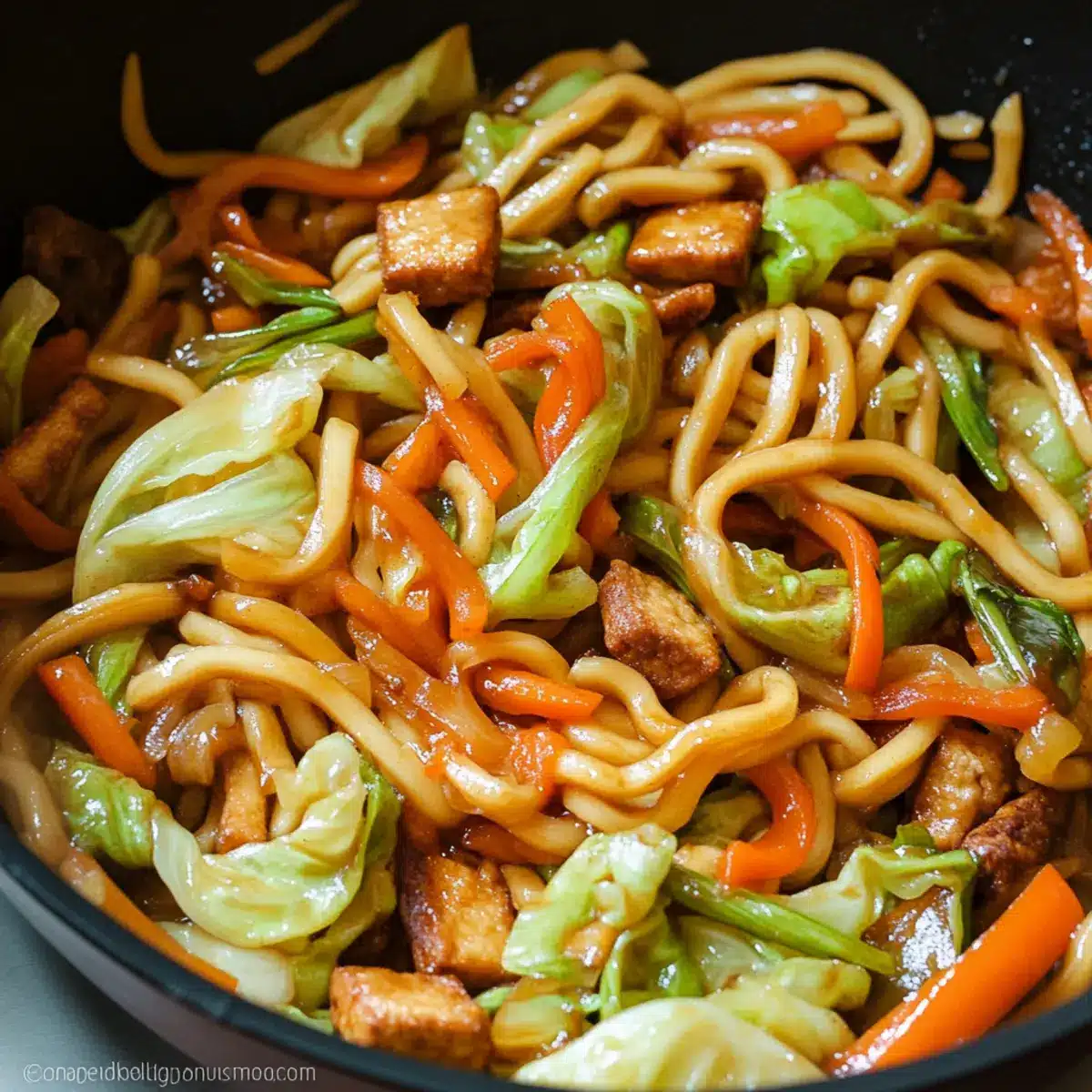
Japanese Stir-Fried Noodles Recipe FAQs
What kind of udon noodles should I use?
For the best texture in your Yaki Udon, I recommend using instant fresh udon or frozen sanuki udon noodles. They have a thicker and chewier consistency, perfect for stir-frying and absorbing the savory flavors.
How can I store leftover Yaki Udon?
Leftover Yaki Udon can be stored in an airtight container in the refrigerator for up to 3 days. Be sure to let it cool completely before sealing the container to prevent any condensation which might make the noodles soggy.
Can I freeze Yaki Udon?
Yes, you can freeze Yaki Udon for up to 2 months! However, I suggest separating the noodles and sauce from the vegetables and tofu before freezing. This helps maintain their individual textures when thawing.
What should I do if my noodles become mushy?
If you find your noodles mushy, it can be helpful to avoid overcooking them in the first place. Always aim for al dente! If they do turn mushy, consider adding them to a stir-fry with a splash of soy sauce to give them new life, perhaps with fresh vegetables added for crunch.
Are there any dietary considerations for Yaki Udon?
Absolutely! This recipe is naturally vegan, but if you have allergies, take care with the soy sauce and any other sauces used, as they may contain gluten or other allergens. Always check ingredient labels to ensure they align with your dietary needs.
What are some good vegetable substitutions for Yaki Udon?
Feel free to experiment with a variety of vegetables! Options like bok choy, snow peas, or broccoli work wonderfully. Just ensure you maintain a balance of flavors, with some crunchy and some sweet, to give your Yaki Udon the best taste experience.

Vibrant Japanese Stir-Fried Noodles Ready in 15 Minutes
Ingredients
Equipment
Method
- Begin by soaking the dried shiitake mushrooms in boiling water for about 15–20 minutes until rehydrated. Remove and slice thinly.
- In a skillet, heat 2 tablespoons of oil over medium-high heat. Add tofu cubes and cook for 5-7 minutes until golden brown. Remove and set aside.
- In a bowl, whisk together soy sauce, rice vinegar, tomato ketchup, sugar, and mushroom oyster sauce until combined.
- Soak or microwave udon noodles according to package instructions for 3–5 minutes. Drain and set aside.
- In the skillet, add oil if needed, then stir-fry sliced onion for 2-3 minutes until translucent. Add bell pepper, carrot, and mushrooms, stir for another 2-3 minutes.
- Add chopped cabbage and udon noodles to the skillet. Pour the sauce over, then toss to coat. Stir for 2-3 minutes on medium heat.
- Continue to stir-fry for another 3-4 minutes until noodles absorb sauce. Adjust seasoning if needed.
- Serve hot, garnished with scallions, sesame seeds, and shichimi togarashi.
Leave a Reply