
As I stood over the bubbling pot, the rich aroma of simmering pork bones enveloped my kitchen, instantly transporting me to a bustling ramen shop in Fukuoka. This Tonkotsu Ramen Soup with Chashu Pork and Black Garlic Oil is not merely a meal; it’s an experience crafted with warmth and care. With its creamy, umami-rich broth and melt-in-your-mouth chashu, this recipe is the perfect way to indulge in comforting homemade goodness. What’s more, you’ll find it not only impresses your loved ones but also offers a customizable twist—allowing you to adapt it to your own taste, whether you choose fresh or instant noodles. Are you ready to dive into a bowl of soul-soothing comfort?
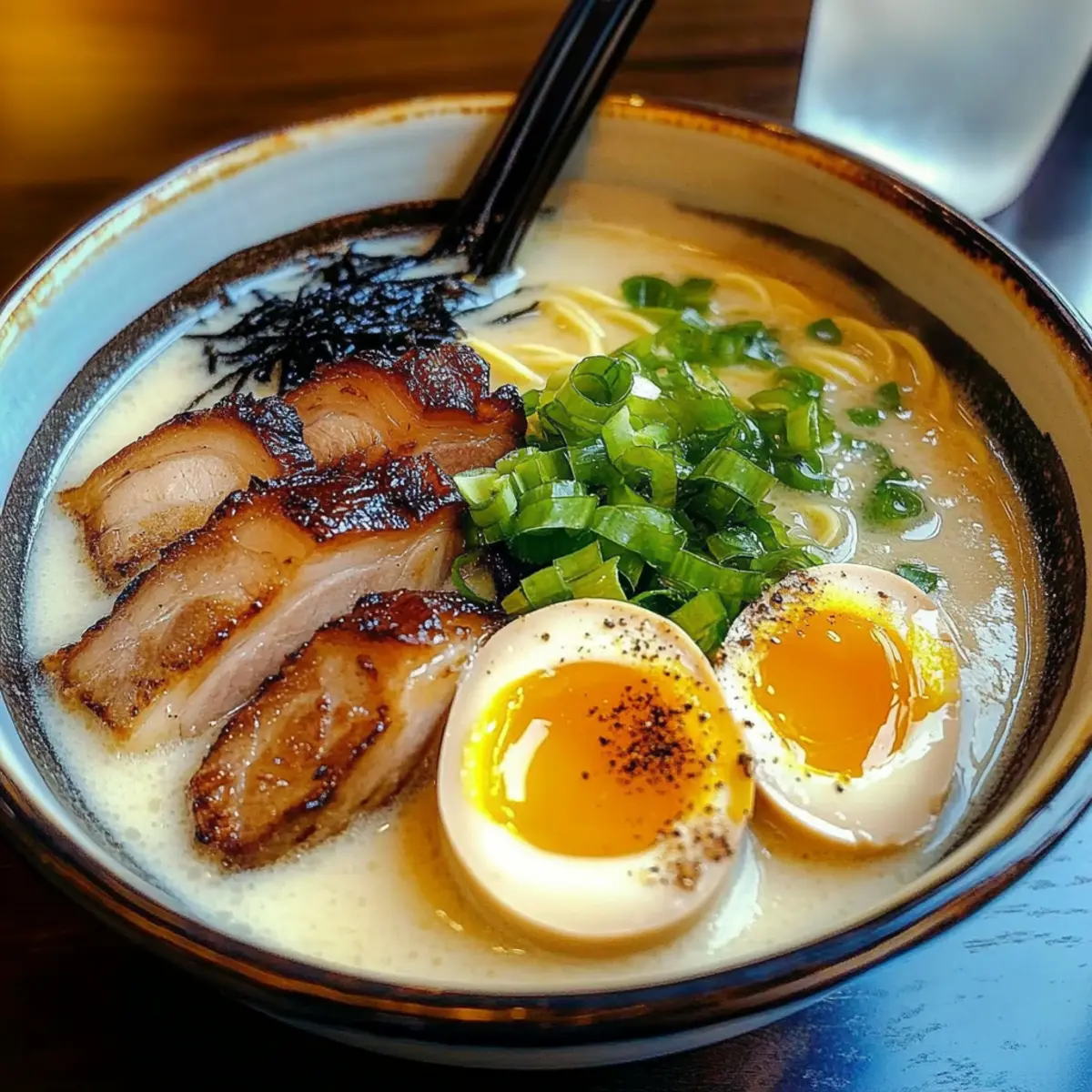
Why is Tonkotsu Ramen a Must-Try?
Comforting, Hearty Bowl: This Tonkotsu Ramen delivers a warm embrace in every spoonful, transforming chilly nights into delightful culinary experiences.
Umami Explosion: The rich broth is crafted with the essence of pork bones, creating a depth of flavor that’s simply irresistible.
Customizable Options: Whether you prefer instant noodles for convenience or want to go all out with traditional handmade versions, this recipe adapts to your schedule and cravings.
Impress Your Guests: Serve this dish at your next gathering, and watch as your friends rave about the restaurant-level quality of your homemade ramen.
Cultural Journey: Not only do you get a delicious meal, but you also embark on a culinary adventure into Japanese culture, making it a perfect conversation starter.
Pair this dish with a refreshing barley tea, and if you’re curious about more cozy soups, be sure to check out the delicious Marry Chicken Soup or Crockpot Thai Soup.
Tonkotsu Ramen Soup Ingredients
• Prepare your kitchen for an umami-packed delight!
For the Broth
- Pork Bones – Essential for a rich, creamy broth; try neck or femur bones for added depth.
- Pork Trotters – Adds collagen for a silky texture; optional if you’re short on time.
- Onion – Enhances sweetness in the broth; white or yellow onions work best.
- Garlic – Provides aromatic flavor; fresh garlic gives the best result.
- Ginger – Contributes warmth and depth; young ginger offers a milder touch.
- Leeks – Add subtle sweetness; use only the white part for best results.
- Water – The base of your broth; keep it topped up while simmering.
- Kombu – Optional for umami depth; omit if you can’t find it.
For the Chashu Pork
- Pork Belly – The star of the show, providing richness and tenderness; pork shoulder is a substitute but changes texture.
- Soy Sauce – Your secret weapon for saltiness and color; low-sodium soy sauce is a lighter option.
- Mirin – Sweetens and enhances flavor; use a mix of sugar and water as a substitute if needed.
- Sake – Adds depth; can be replaced with dry sherry or white wine.
- Sugar – Adds sweetness to the chashu; brown sugar creates a delightful flavor twist.
For the Black Garlic Oil
- Black Garlic – Imparts a unique complexity; feel free to use roasted garlic instead for a different flavor.
- Neutral Oil – Necessary for frying; vegetable or canola oil works beautifully.
- Sesame Oil – For an aromatic finish; balances the smokiness.
For the Ramen Bowl
- Fresh Ramen Noodles – Best for authentic texture; instant noodles can work for quick meals.
- Soft-Boiled Eggs – Marinated for flavor; traditional ajitsuke tamago is the way to go.
- Toppings – Scallions, bamboo shoots, nori, corn, and sesame seeds enhance flavor and presentation.
Dive into creating this Tonkotsu Ramen Soup and bring the warmth of Japan into your home!
Step‑by‑Step Instructions for Tonkotsu Ramen Soup
Step 1: Prepare the Broth
Begin by blanching the pork bones and trotters in a large pot of boiling water for 5 minutes to remove impurities. Rinse them under cold water until clean. Place the bones in the pot again, cover with fresh water, and add onion, garlic, ginger, and leeks. Bring to a simmer at medium heat, skimming any scum that rises, and let it cook for 6–8 hours, maintaining a gentle simmer and adding water as necessary.
Step 2: Make the Chashu Pork
While the broth simmers, prepare the chashu pork. Roll the pork belly tightly and tie it with kitchen twine. In a separate pot, combine soy sauce, mirin, sake, and sugar, heating gently. Add the pork belly and simmer it on low heat for 2–3 hours until it’s tender and the flavors meld. Brush the pork with reduced braising liquid as it cooks for extra flavor, then allow it to cool slightly before slicing.
Step 3: Prepare Black Garlic Oil
In a small saucepan, heat ½ cup of neutral oil over low heat. Add whole black garlic cloves and a few crushed raw garlic cloves, gently cooking for about 10 minutes until fragrant and lightly golden. Remove the pan from heat and allow it to cool slightly before blending with a tablespoon of sesame oil and a splash of soy sauce until smooth. Set aside to infuse.
Step 4: Make Soft-Boiled Eggs
Bring a small pot of water to a rolling boil, then gently add the eggs and boil for exactly 6.5 minutes. After cooking, transfer the eggs immediately to an ice bath to stop the cooking process. Once cooled, peel the eggs and marinate them in some of the leftover braising liquid, letting them soak for at least 30 minutes for enhanced flavor.
Step 5: Cook the Noodles
When your broth is nearly ready, prepare your ramen noodles according to the package instructions. If using fresh noodles, usually a quick 2-3 minutes in boiling water will suffice. Drain the noodles and rinse them briefly under cold water to stop further cooking, ensuring they maintain their texture.
Step 6: Assemble the Ramen Bowl
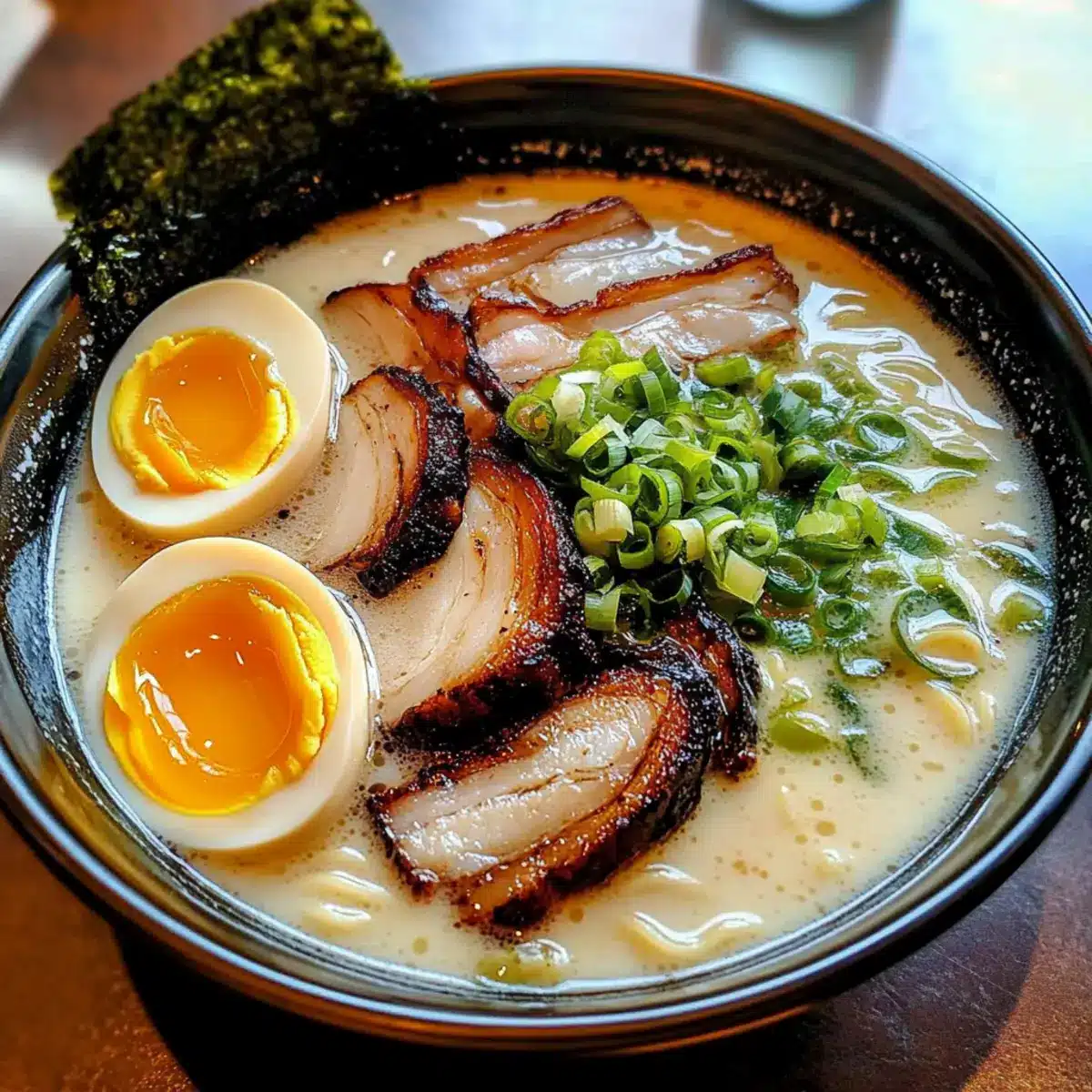
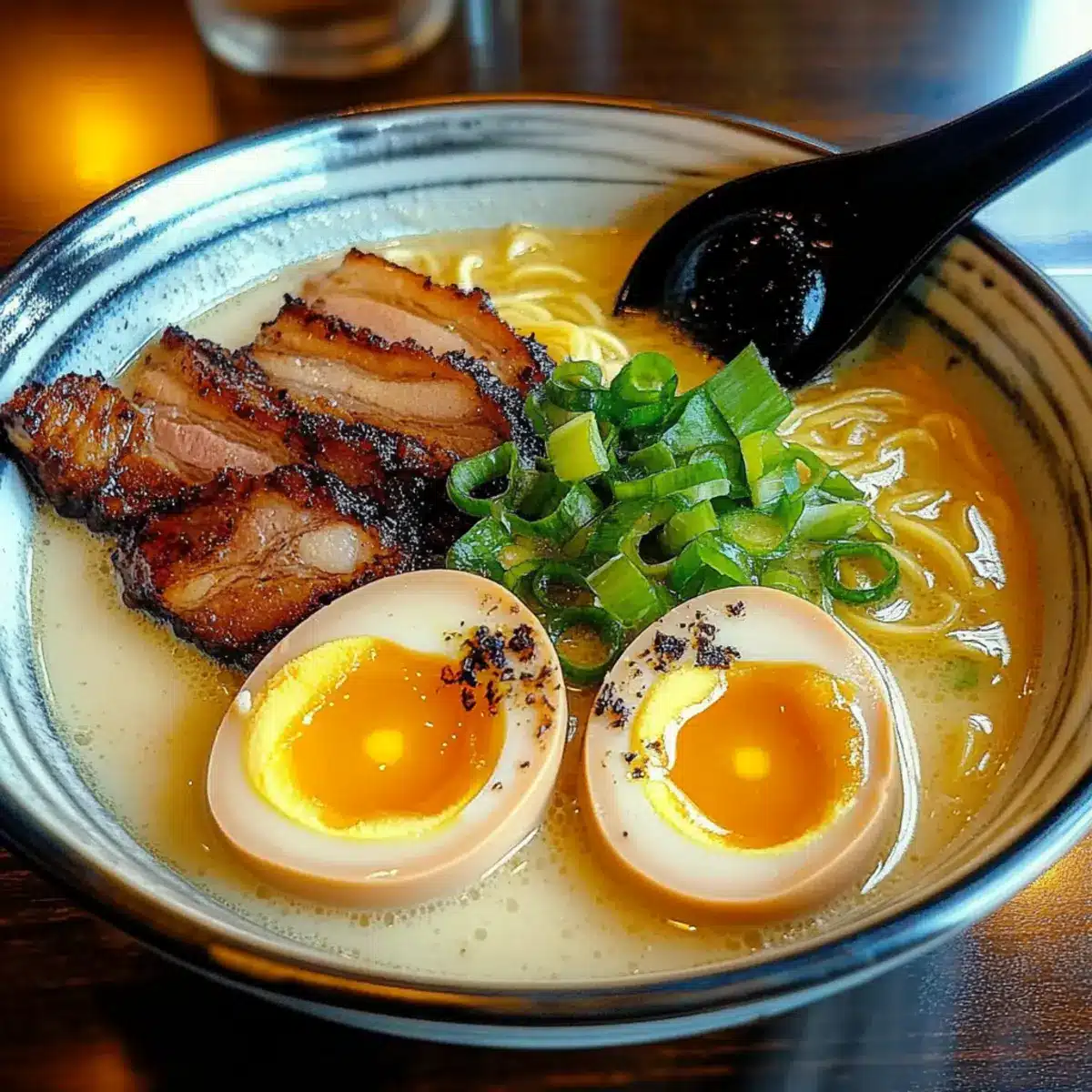
Ladle the warm, rich tonkotsu broth into deep, warmed bowls. Divide the cooked ramen noodles evenly among the bowls. Top with slices of chashu pork, halved marinated eggs, and your choice of toppings such as scallions, bamboo shoots, nori, and a sprinkle of sesame seeds. Finally, finish the dish by drizzling with the smoky black garlic oil before serving, delivering an unforgettable bowl of warmth.
How to Store and Freeze Tonkotsu Ramen Soup
Fridge: Store the homemade broth in an airtight container for up to 4 days, ensuring it’s completely cooled before refrigerating.
Freezer: For longer storage, freeze the broth in airtight bags or containers for up to 2 months. Thaw in the fridge overnight before reheating.
Separate Ingredients: Keep noodles and toppings stored separately to maintain texture, using airtight containers for both noodles and toppings for best results.
Reheating: Gently reheat the broth on the stovetop until steaming, adding a splash of water if necessary to adjust thickness before serving your delicious Tonkotsu Ramen Soup.
What to Serve with Tonkotsu Ramen Soup
Elevate your meal experience with thoughtful pairings that enhance the flavors of your rich and creamy ramen.
- Creamy Mashed Potatoes: Their velvety texture pairs beautifully with the umami-rich broth, adding comfort to your dining table.
- Pickled Vegetables: A tangy crunch perfect for balancing the richness of the ramen, providing a refreshing palate cleanser.
- Steamed Edamame: Lightly salted edamame complements the savory notes, adding a satisfying bite to accompany your meal.
- Nori Chips: Crispy nori chips lend a delightful crunch, echoing the sea flavors and enhancing the overall experience.
- Japanese Lager: A cold beer like Sapporo beautifully contrasts the warm broth, creating a harmonious balance that’s truly satisfying.
- Chilled Soba Noodles: Perfect for a light side; their coolness offers a delightful contrast to the warmth of the ramen.
- Sesame Spinach Salad: This dish offers a fresh, nutty element that elevates your meal while providing nutritional value.
- Soft Creamy Cheesecake: A lightly sweet dessert will conclude your ramen feast on a comforting note and satisfy any sweet cravings.
- Miso Soup: As a cozy complement, its miso flavor enhances the umami profile, keeping the Japanese theme alive and well.
Tonkotsu Ramen Soup Variations
Embrace your culinary creativity by exploring these delightful variations that will elevate your Tonkotsu Ramen experience!
-
Vegetarian Version: Swap the pork broth for a rich vegetable broth, enhancing umami with mushrooms and kombu. Your bowl will be equally comforting and satisfying.
-
Spicy Kick: Add a splash of chili oil or a teaspoon of gochujang to the broth for exciting heat without compromising flavor. This twist will warm your heart and soul.
-
Quick & Easy: Use instant ramen noodles for a time-saving meal without sacrificing comfort. Just whip up the broth and enjoy a luscious bowl in no time!
-
Noodle Alternatives: Try using zoodles or shirataki noodles for a gluten-free or lower-carb option. It’s a surprising twist that keeps it light yet comforting.
-
Smoky Flavor Boost: Add a hint of smoked paprika or chipotle powder to your broth to introduce a delicious smokiness that complements the black garlic oil perfectly.
-
Miso-Rich Broth: For added depth, stir in a spoonful of miso paste during the last hour of simmering. It brings an added layer of richness to your already divine soup.
-
Seafood Infusion: Incorporate shrimp or scallops into the bowl for a delightful seafood twist, balancing the richness of the pork beautifully.
Be sure to also check out delicious options like White Bean Soup for more comforting varieties. Dive into these variations and create your very own signature Tonkotsu Ramen!
Make Ahead Options
These Tonkotsu Ramen Soup components are perfect for meal prep, allowing you to enjoy this comforting dish even on the busiest of weeknights! You can prepare the broth up to 3 days in advance and refrigerate it. For optimal quality, chill it in an airtight container, and reheat gently before serving. The chashu pork can also be made ahead of time—just slice and store it in the glaze for up to 2 days; this enhances the flavors even further. On the day you plan to serve, cook the fresh ramen noodles briefly as they need minimal time—usually 2-3 minutes—to achieve that perfect texture. Just remember, the soft-boiled eggs can marinate overnight for deeper flavor, making your Tonkotsu Ramen Soup just as delicious as when freshly made!
Expert Tips for Tonkotsu Ramen Soup
-
Bone Selection: Choose high-quality pork bones and trotters. The flavor will significantly enhance your Tonkotsu Ramen soup; inferior cuts can lead to a bland broth.
-
Simmering Time: Patience is key! Simmer the broth for the full 6–8 hours to extract all the rich flavors. Shortening this time can result in a watery broth.
-
Keep It Clear: Regularly skim the broth to maintain clarity. This step prevents a greasy finish and ensures a visually appealing soup.
-
Chashu Perfection: Allow chashu pork to cool before slicing. This prevents the meat from shredding and ensures each piece is beautifully tender and juicy.
-
Customize Wisely: Feel free to adjust toppings based on your family’s preferences. Adding seasonal vegetables can elevate the traditional Tonkotsu Ramen while providing nutritional benefits.
-
Leftover Love: Store broth, noodles, and toppings separately to maintain optimal texture. This will keep your leftovers delicious for up to 4 days!
Tonkotsu Ramen Soup Recipe FAQs
What type of pork bones should I use for the broth?
Absolutely! For the richest flavor, opt for a combination of pork bones, such as neck bones and trotters. These cut options provide the creamy, umami-rich qualities that make Tonkotsu Ramen so delectable. Look for bones that have plenty of marrow for added depth; they should be fresh and meaty for the best results.
How should I store leftover Tonkotsu Ramen?
Very! To keep your delicious Tonkotsu Ramen fresh, store the broth, noodles, and toppings separately. Refrigerate the broth in an airtight container for up to 4 days. For longer preservation, freeze it in bags or containers for up to 2 months. Remember, it’s important to let everything cool completely before storing—this helps maintain texture and flavor!
Can I freeze the Tonkotsu Ramen broth?
Absolutely! To freeze your broth, allow it to cool completely, then pour it into airtight freezer bags or containers. Remember to leave some space in the container since the liquid expands when frozen. You can keep it in the freezer for up to 2 months. When ready to enjoy again, thaw overnight in the fridge and gently reheat!
What if my broth turns out greasy?
Common troubleshooting! If your broth appears greasy, it might be due to not skimming it regularly while simmering. Make sure to skim off the scum and excess fat that rise to the top during cooking. To salvage the broth after it’s cooked, let it cool in the refrigerator, as the fat will solidify on the surface and can be easily removed before reheating.
Can I make Tonkotsu Ramen vegetarian?
Yes, indeed! For a vegetarian version of Tonkotsu Ramen, create a vegetable broth using mushrooms, onions, garlic, and kombu for umami depth. Simmer the ingredients together, similar to the pork version but for a shorter time (about 1-2 hours). This variation may not fully replicate the creaminess of pork bone broth but will yield a delicious, comforting bowl that you can customize with all the typical toppings!
Are there any dietary considerations with this recipe?
Very! If you have dietary restrictions, you should check for allergies related to soy sauce, mirin, and any other sauces used. Gluten-free soy sauce is available and can be a good substitute for those with gluten intolerance. If cooking for pets, be cautious with onion and garlic, as they can be harmful to dogs and cats. Always keep the meal in mind for your loved ones’ dietary needs!
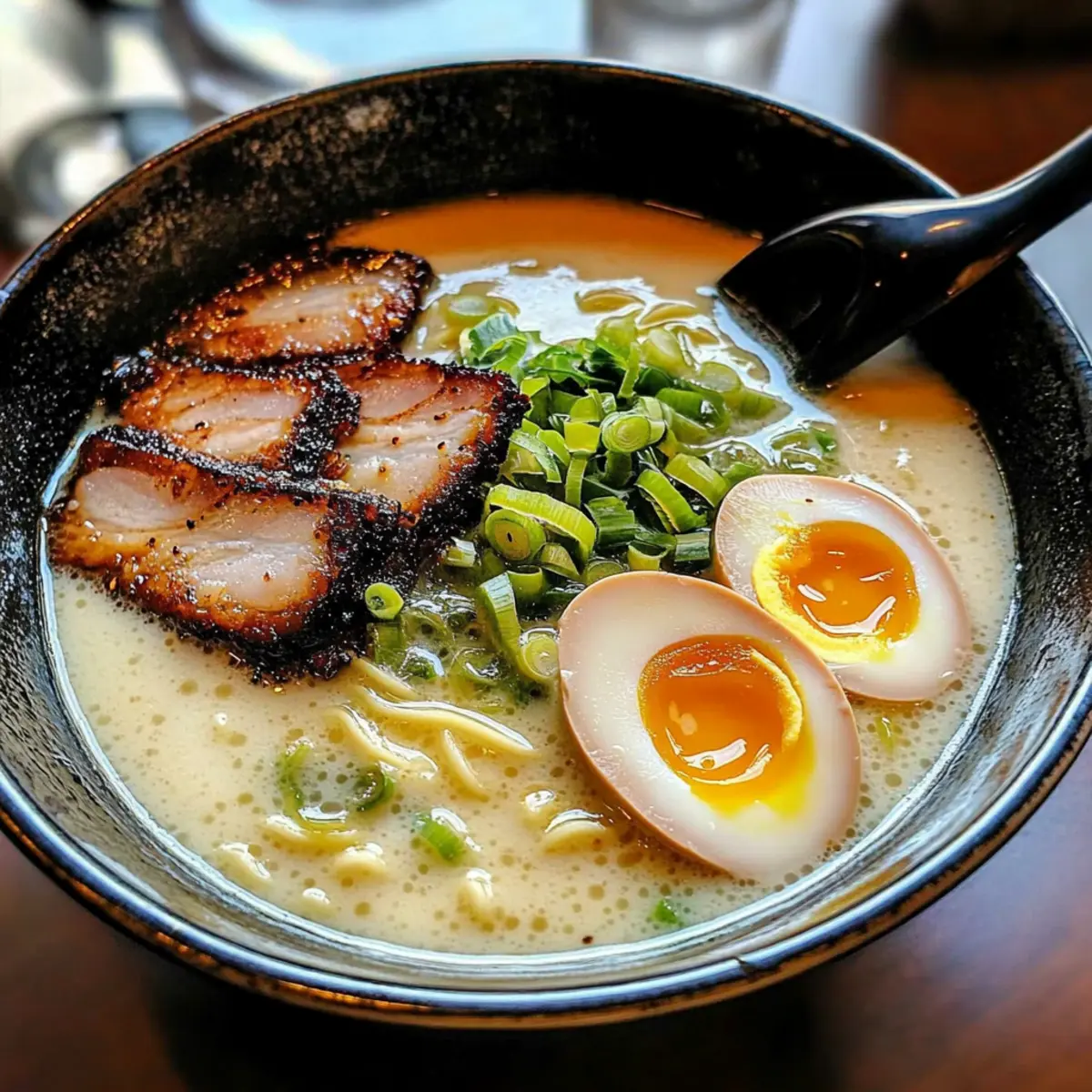
Creamy Tonkotsu Ramen Soup for Cozy Nights at Home
Ingredients
Equipment
Method
- Step 1: Prepare the Broth - Blanch the pork bones and trotters in boiling water for 5 minutes to remove impurities. Rinse under cold water and then return to pot with fresh water, onion, garlic, ginger, and leeks. Simmer for 6-8 hours, skimming as necessary.
- Step 2: Make the Chashu Pork - Roll pork belly tightly and tie with kitchen twine. Combine soy sauce, mirin, sake, and sugar in a pot, heat gently, add pork belly, and simmer for 2-3 hours. Allow to cool before slicing.
- Step 3: Prepare Black Garlic Oil - Heat neutral oil in a small saucepan over low heat. Add black garlic and crushed garlic, cook for about 10 minutes until fragrant. Blend with sesame oil and soy sauce until smooth.
- Step 4: Make Soft-Boiled Eggs - Boil eggs for 6.5 minutes, move to an ice bath immediately. Once cooled, peel and marinate in leftover braising liquid for at least 30 minutes.
- Step 5: Cook the Noodles - Prepare noodles according to package instructions, usually a quick 2-3 minutes for fresh noodles. Drain and rinse under cold water.
- Step 6: Assemble the Ramen Bowl - Ladle broth into bowls, add noodles, top with chashu pork, marinated eggs, and desired toppings. Drizzle with black garlic oil before serving.
Leave a Reply